
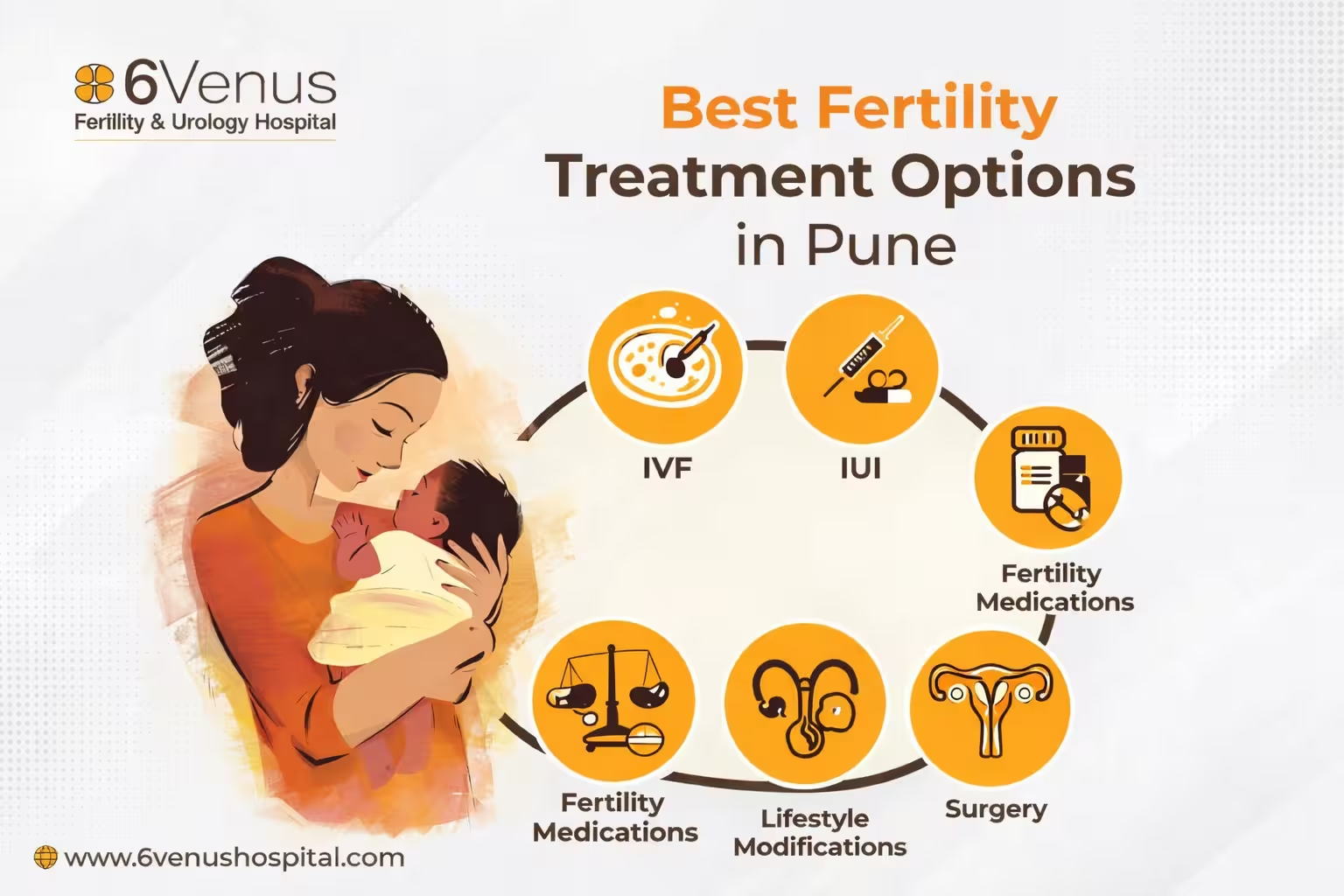
Every month that passes without a positive test feels heavier than the last. If that sentence lands somewhere familiar, you are already in the middle of one of the most emotionally layered experiences a couple can go through. What makes it harder is the sheer volume of medical terms, clinic names, and conflicting advice waiting for you the moment you start searching. IVF, IUI, ICSI, blastocyst transfer, AMH levels, embryo grades — it is a lot to take in before you have even sat across from a doctor. This guide on the best fertility treatment options in Pune is written specifically to cut through that noise. Not to promote a clinic, but to give you clear, medically sound, and genuinely useful information so that when you do walk into a consultation, you already understand what to ask, what to expect, and how to make an informed decision for your own body and situation.
Why Fertility Treatment in Pune Has Become a Real Option for Couples Across Maharashtra
Pune has grown into one of the most credible fertility care destinations in India, and not without reason. The city now hosts multiple internationally accredited IVF laboratories, fellowship-trained reproductive medicine specialists, and clinics that operate at par with facilities in Mumbai, Hyderabad, and Delhi. For couples from Nashik, Satara, Kolhapur, Aurangabad, and even parts of Goa, Pune offers something that travelling to a metro often does not: accessible, quality fertility care without the fatigue of a distant city.
More importantly, the fertility infrastructure in Pune has matured beyond just technology. Counselling support, clear pricing protocols, and structured treatment timelines are now part of how good clinics operate here. When couples explore the best fertility treatment options in Pune, they are not just looking for a clinic with equipment. They are looking for a team that explains things properly, monitors carefully, and adjusts plans when something is not working.
According to the World Health Organization, approximately 1 in 6 people worldwide experience infertility at some point in their reproductive life. In India, estimates suggest around 10 to 15 percent of couples face significant difficulty conceiving. That is not a small number, and it makes early, correct diagnosis far more valuable than any single treatment protocol.
The Most Common Fertility Problems Couples in Pune Come In With
Before even talking about IVF or IUI, it helps to understand why treatment becomes necessary in the first place. Fertility problems are rarely random. Most have an identifiable cause, and identifying that cause correctly is what determines whether you start with something simple or move directly to advanced treatment.
On the female side, the most common reasons include blocked or damaged fallopian tubes, polycystic ovarian syndrome affecting ovulation, endometriosis causing adhesions around the uterus and ovaries, diminished ovarian reserve indicated by a low AMH level, and uterine abnormalities like fibroids or polyps. Age plays a deeply significant role too. Egg quality and quantity begin declining more steeply after 35, which is why the right time to seek help is not something couples should delay thinking about.
Male infertility contributes to nearly half of all infertility cases, yet it is still the side of the equation that gets overlooked far too often. Low sperm count, poor sperm motility, abnormal morphology, hormonal imbalances, and conditions like varicocele are all treatable when diagnosed accurately. A complete semen analysis, hormone panel, and in some cases a scrotal ultrasound can give a male infertility specialist in Pune the full picture needed to build a treatment plan that actually works.
Then there is unexplained infertility, diagnosed when all standard tests come back normal but conception still does not happen. Modern fertility workups can go deeper: sperm DNA fragmentation testing, endometrial receptivity analysis (ERA), and advanced embryo grading are tools that good fertility clinics in Pune now use to find what basic tests miss. Access to that depth of testing is what separates one clinic from another, and it is worth checking before choosing an IVF specialist in PCMC.
IUI Treatment in Pune: The First Step That Works for More Couples Than People Expect
Intrauterine insemination, or IUI, is often described as a simple procedure, and in mechanical terms it is. A sperm sample is collected, processed in the lab to select the most motile and morphologically normal sperm, and then placed directly into the uterus through a thin catheter during ovulation. The whole clinic visit takes under thirty minutes. There is no anaesthesia, no surgical incision, and most women resume their day normally afterward.
What makes IUI effective for the right candidates is that it eliminates a significant barrier in natural conception: the long journey sperm must travel from the vagina through the cervix into the uterus. By depositing prepared sperm directly into the uterine cavity at the right time, IUI significantly increases the number of healthy sperm that reach the fallopian tubes where fertilisation happens.
IUI treatment in Pune works best for:
- Mild male factor infertility with sperm count or motility below ideal but not severely compromised
- Unexplained infertility in women under 35
- Irregular or anovulatory cycles where ovulation induction medications improve response
- Couples where cervical mucus quality is poor or hostile to sperm survival
- Single women or same-sex couples using donor sperm
The success rate per IUI cycle is realistically between 10 and 20 percent for women under 35, dropping gradually with age. Most fertility specialists in Pune recommend trying two to three IUI cycles before reassessing. If three well-timed, medically monitored IUI cycles with good sperm preparation do not result in pregnancy, moving to IVF is the standard clinical recommendation rather than continuing with a treatment that is no longer the most efficient path forward.
Costs for IUI treatment in Pune range from approximately Rs. 5,000 to Rs. 25,000 per cycle depending on whether ovulation induction medications are included, the clinic’s protocols, and whether monitoring scans are billed separately. It is significantly more affordable than IVF, which is one reason it makes sense to start here when the clinical picture supports it.
IVF in Pune: What the Process Actually Involves and When It Makes Sense
IVF is the treatment most people think of first when fertility struggles come up, and in the right clinical context, it is genuinely transformative. But it is also widely misunderstood. Many couples either delay it unnecessarily out of fear or rush into it before simpler options have been properly tried. Understanding what IVF at an IVF centre in Pune actually involves helps cut through both of those patterns.
In vitro fertilisation means fertilisation outside the body. The process begins with ovarian stimulation, where fertility injections containing follicle-stimulating hormone (FSH) and luteinising hormone (LH) are administered daily for approximately 10 to 14 days. These injections stimulate the ovaries to develop multiple follicles. The response is monitored carefully through regular ultrasounds and blood hormone tests, with the stimulation protocol adjusted in real time based on how each patient’s ovaries are responding.
When follicles reach the right size, a trigger injection finalises egg maturation. Egg retrieval happens 34 to 36 hours later, under short sedation or anaesthesia. The eggs are then handed to the embryology team working in the IVF lab. On the same day, a sperm sample is collected and processed. Fertilisation happens in a controlled lab environment over the next one to five days as fertilised eggs develop into embryos.
Embryo transfer, the step where one or two selected embryos are placed into the uterus using a fine catheter, is typically done on day 3 or day 5 of embryo development. Day 5 embryos, called blastocysts, are generally considered stronger candidates for implantation, and blastocyst transfer is now a standard offering at most quality IVF centres in Pune. A pregnancy blood test is done approximately 14 days after transfer.
According to the Mayo Clinic, IVF success rates are most significantly influenced by a woman’s age. For women under 35, live birth rates per IVF cycle typically range between 40 and 55 percent at high-quality facilities. This drops to approximately 30 to 40 percent for ages 35 to 37, around 20 to 30 percent for ages 38 to 40, and below 15 percent for women over 41 using their own eggs.
IVF is most appropriately recommended for:
- Blocked or absent fallopian tubes
- Previous IUI cycles that have not worked
- Low ovarian reserve requiring aggressive stimulation
- Severe endometriosis affecting the pelvic environment
- Significant male infertility factors
- Situations where preimplantation genetic testing of embryos is planned
Standard IVF costs in Pune typically range from Rs. 1.25 lakh to Rs. 2.75 lakh per cycle. Add-ons like ICSI, blastocyst culture, embryo freezing, and preimplantation genetic testing each carry additional costs. Asking for a detailed cost breakdown before committing to a clinic helps couples avoid unexpected bills midway through treatment. Our published IVF treatment cost in Wakad breaks those figures down stage by stage, so you have something concrete to compare against.
ICSI in Pune: When Male Infertility Is the Bigger Part of the Picture
ICSI, or intracytoplasmic sperm injection, is a specialised form of IVF where rather than allowing sperm to fertilise an egg naturally in a dish, an embryologist uses a microscopic glass needle to inject a single selected sperm directly into the centre of an egg. The rest of the process, including stimulation, egg retrieval, embryo culture, and transfer, is identical to IVF.
The key difference ICSI makes is in the fertilisation step itself. In standard IVF, sperm still need to be capable enough to penetrate the egg on their own in a lab environment. With ICSI, that requirement is removed. This makes ICSI the most effective approach when:
- Sperm count is severely low (severe oligospermia or azoospermia)
- Sperm motility or morphology is significantly abnormal
- Sperm retrieval from the testes is required (TESA or PESA procedures)
- Previous standard IVF cycles resulted in poor or failed fertilisation
- Sperm DNA fragmentation is high, affecting fertilisation quality
ICSI treatment in Pune achieves fertilisation rates of approximately 70 to 80 percent per injected egg, meaningfully higher than conventional IVF when male factor infertility is present. The cost for an IVF cycle with ICSI typically ranges from Rs. 1.5 lakh to Rs. 2.5 lakh, slightly higher due to the additional embryology work involved.
It is worth noting that not every IVF cycle requires ICSI. A good fertility clinic in Pune will recommend ICSI when the clinical indicators genuinely justify it, not as a default add-on. If a clinic recommends ICSI for every couple without reviewing the semen report first, that is a question worth asking directly.
Fertility Preservation in Pune: Egg Freezing Before the Window Closes
Not every person who approaches a fertility clinic in Pune is doing so urgently to conceive right now. A growing number of women, particularly in their late 20s and early 30s, are proactively preserving their fertility for the future. Egg freezing, technically called oocyte cryopreservation, involves the same stimulation and retrieval process as IVF but without fertilisation. The retrieved eggs are frozen using vitrification and stored until the woman is ready to use them.
Egg freezing is most valuable when a woman is facing medical treatment that could affect fertility such as chemotherapy, when there is a family history of early menopause, or when she wants to preserve reproductive options before age-related egg quality decline becomes significant. The ideal window is generally before age 35, when egg quality and quantity are still reasonably strong.
Embryo freezing, which happens as part of an IVF cycle when good-quality embryos are not transferred fresh but cryopreserved for future use, is also standard. Frozen embryo transfers (FET) often achieve comparable or slightly better success rates than fresh transfers in some studies, as the uterine lining has time to recover from the stimulation phase before the transfer.
What to Look for When Choosing a Fertility Clinic in Pune
Choosing a fertility clinic in Pune deserves more specific guidance than just “check success rates and find an experienced doctor.” Here are the things that actually matter:
Ask about the IVF laboratory environment. A good IVF lab operates under tightly controlled conditions: stable temperature and humidity, low-oxygen culture systems, and time-lapse embryoscopes that monitor embryo development continuously without disturbing them. These are not luxury features. They genuinely affect embryo quality and therefore outcomes. Ask your prospective clinic directly whether they use a time-lapse incubation system.
Ask about the embryologist’s experience. Fertility treatment outcomes depend heavily on the person handling your eggs and sperm in the lab. A clinic might have a well-known consultant whose name draws patients, but the embryologist’s skill determines whether fertilisation happens properly and whether embryos develop as they should. Ask how many cycles the lab’s embryology team handles annually and what their fertilisation and blastocyst development rates are.
Request a fully itemised cost estimate before you begin. In Pune, as across India, it is common for clinics to advertise a low base package and then bill separately for injections, monitoring scans, ICSI, blastocyst culture, and cryopreservation. The final cost can be significantly higher than the initial quote. Get the full breakdown including medications before committing.
Note how the clinic handles a failed cycle. A clinic that openly discusses what happens if the first cycle does not work, that explains how they review the cycle and adjust the protocol, and that does not immediately push expensive add-ons without justification, is one that is working genuinely in your interest.
The Lifestyle Factors That Actually Affect Fertility Treatment Outcomes in Pune
Medical treatment works better when the body receiving it is in a reasonably healthy state. Certain lifestyle factors measurably affect fertility outcomes and are within your control to address before and during treatment.
BMI has a documented impact on ovarian response to stimulation medications. Women who are significantly overweight or underweight may produce fewer or poorer quality eggs during an IVF cycle. Getting BMI closer to a healthy range before starting, where possible and with medical guidance, improves stimulation response. For men, obesity is associated with lower testosterone and reduced sperm quality.
Smoking is one of the most consistently documented factors affecting fertility in both partners. It reduces ovarian reserve, accelerates egg quality decline, impairs sperm DNA integrity, and reduces IVF success rates. Quitting before starting treatment is one of the most impactful steps either partner can take.
Chronic stress does not cause infertility on its own, but elevated cortisol over time affects hormone regulation and ovulation. Sleep quality, moderate physical activity, and reducing excessive caffeine intake all support overall hormonal balance during fertility treatment. These habits do matter, but they sit alongside several clinical factors, and our guide to what decides IVF success puts both in proportion.
What to Bring and Expect at Your First Fertility Consultation in Pune
Walking into a fertility consultation better prepared makes the conversation more productive. Before your visit, gather whatever medical records are available: previous blood test results, scan reports, surgical history, and for the male partner, any prior semen analysis. If neither partner has had any testing done, that is completely fine. The consultation will map out what baseline tests are needed.
A standard fertility workup in Pune for women typically includes a day 2 or day 3 hormonal blood panel checking FSH, LH, estradiol, and AMH, a pelvic ultrasound to count antral follicles and assess the uterus, and an HSG or diagnostic laparoscopy if tube patency is a question. For men, a semen analysis is the starting point, followed by hormonal testing if the semen report raises concerns.
Having both partners evaluated at the first appointment is important. Given that male factor contributes to roughly 40 to 50 percent of all infertility cases, skipping the male evaluation at the start is a significant clinical gap. For further reading on how comprehensive fertility evaluation is approached, the NHS guide on infertility diagnosis provides a medically sound overview of what a proper workup involves.
Frequently Asked Questions About the Best Fertility Treatment Options in Pune
1. How do I know if I need IUI or IVF as my first treatment in Pune?
The choice depends on your diagnosis, not on cost or how long you have been trying. If semen analysis is only mildly abnormal, tubes are open, and egg reserve is reasonable, IUI is a sensible starting point. If tubes are blocked, sperm parameters are significantly poor, egg reserve is low, or previous IUI cycles have not worked, IVF is the more appropriate and efficient choice. Your fertility specialist in Pune will guide this after reviewing both partners’ test results.
2. What is a realistic IVF success rate in Pune for a woman aged 32?
For women under 35 with good ovarian reserve and no uterine abnormality, IVF live birth rates at well-equipped clinics in Pune typically fall between 40 and 55 percent per fresh cycle. While success in the first cycle is realistic, it is not guaranteed, and some couples need two cycles. Success rates drop progressively with age after 35, which is why earlier consultation is always better.
3. Does ICSI guarantee fertilisation will happen?
ICSI significantly improves fertilisation rates, achieving fertilisation in approximately 70 to 80 percent of injected eggs. However, fertilisation is not 100 percent guaranteed because normal cellular events still need to occur after the sperm is placed inside the egg. Some eggs may not fertilise, and some fertilised eggs may not develop into viable embryos. This is why producing multiple eggs through stimulation is clinically important.
4. How many IUI cycles should we try before moving to IVF in Pune?
Most fertility specialists recommend two to three IUI cycles before reassessing. After three unsuccessful cycles with proper timing, good sperm preparation, and ideally ovulation induction support, the clinical benefit of continuing IUI diminishes and IVF offers a significantly better chance. Women over 35 are often advised to move to IVF after one or two IUI cycles rather than three, given the time sensitivity of age on egg quality.
5. Is ICSI necessary for every IVF cycle, or only in specific cases?
ICSI is specifically indicated when male infertility is the primary concern or when previous IVF cycles resulted in poor fertilisation. For couples with normal semen parameters and no prior IVF failure, standard IVF without ICSI is equally effective. Be cautious of any clinic that routinely recommends ICSI for every couple without reviewing the semen analysis first.
6. What does AMH tell a fertility doctor, and should I get this test before my first consultation?
AMH, or anti-Mullerian hormone, reflects ovarian reserve, an estimate of how many eggs remain in your ovaries. A low AMH does not mean you cannot conceive, but it tells the doctor that more aggressive stimulation may be needed or that time is a factor. Getting your AMH done before the first consultation makes the appointment more productive because the doctor can already discuss specific treatment options with real data.
7. Can male infertility be treated without IVF or ICSI in Pune?
Yes, many causes of male infertility are treatable without assisted reproduction. Hormonal imbalances respond well to medication. Varicocele can be corrected surgically with meaningful improvement in semen parameters. Lifestyle changes in men who smoke or are significantly overweight can produce measurable improvement in sperm quality over three to six months. IVF or ICSI becomes necessary when sperm parameters are severely abnormal, do not improve with treatment, or when surgical sperm retrieval from the testes is required.
8. Is egg freezing worth it for a 29-year-old woman in Pune who is not ready to conceive yet?
At 29, egg quality and quantity are generally at a good level, making this an effective age for egg freezing. Whether it makes sense depends on your individual AMH level, antral follicle count, and personal circumstances. A consultation with a fertility specialist in Pune for baseline testing before making this decision is the sensible starting point rather than committing to the procedure without knowing your current ovarian reserve.
9. What is the actual total cost of IVF in Pune when all add-ons are included?
The base IVF package at most quality clinics in Pune is advertised between Rs. 1.25 lakh and Rs. 1.5 lakh. However, when you factor in ovarian stimulation medications (Rs. 40,000 to Rs. 60,000), monitoring scans, ICSI if recommended (Rs. 25,000 to Rs. 50,000 additional), blastocyst culture, embryo freezing, and frozen embryo transfer, the realistic total for a complete IVF attempt often lands between Rs. 1.8 lakh and Rs. 3 lakh. Always request an itemised estimate before beginning.
10. How long does one complete IVF cycle take from start to pregnancy test?
From the start of ovarian stimulation injections to the pregnancy blood test, a fresh IVF cycle typically takes four to six weeks. Stimulation runs for 10 to 14 days, followed by egg retrieval, three to five days of embryo development, the embryo transfer, and then a 14-day wait before the pregnancy test. If a frozen embryo transfer is being done in a subsequent cycle, the preparation period adds another three to four weeks. Most couples should plan for at least six to eight weeks from first injection to result.