

A diagnosis rarely arrives alone. Along with the medical decisions comes a quieter one that many doctors never raise in the first appointment: what happens to your chance of having children once treatment begins. For women in and around Wakad who are facing surgery, chemotherapy, or a condition that threatens ovarian function, fertility preservation with egg freezing in Wakad is often the only window that stays open once treatment starts. That window is measured in days, not months.
Fertility preservation with egg freezing is the process of retrieving and freezing a woman’s eggs before a treatment or condition that could reduce her ability to conceive later. The eggs are stored through vitrification, a rapid freezing method, and remain usable for years until she is ready to try for pregnancy.
Why a New Diagnosis Changes the Fertility Conversation
Certain cancer treatments, some autoimmune therapies, and surgeries involving the ovaries can lower egg count or push a woman into early menopause. The treatment that protects her health can, at the same time, take away the option to have biological children later. Oncologists are focused on survival first, and rightly so. But survival and family planning are not competing goals. They can both be protected if fertility is discussed before the first round of treatment, not after.
Doctors who treat cancer in young women report that fertility preservation is still brought up far less often than it should be. Many patients only learn that egg freezing was an option once treatment has already started, and by then, the biological window has usually closed. Asking your oncologist directly, on the day of diagnosis, whether fertility preservation should happen before treatment is one of the most important questions a patient can raise for herself.
What Fertility Preservation With Egg Freezing Actually Protects
Egg freezing does not guarantee a future pregnancy. What it protects is the chance. Eggs retrieved and frozen before chemotherapy, radiation, or ovary related surgery are shielded from whatever damage that treatment might cause. Once treatment ends, those eggs are still the age they were on the day they were frozen, not the age the patient is when she is ready to use them.
This matters because egg quality declines with age far faster than most people expect, and treatments like chemotherapy can accelerate that decline further. A woman diagnosed at 28 who freezes her eggs before treatment keeps 28 year old eggs in storage, even if she does not try for pregnancy until her late thirties.
- Preserves egg quality at the point of diagnosis, before treatment can affect it
- Gives the patient a decision she can make later, once she has recovered
- Removes the pressure to conceive naturally during or immediately after treatment
- Works alongside the egg and sperm freezing pathway already used for planned IVF cycles
- Outside a medical diagnosis the timing is yours to choose, and the right age for egg freezing explains how that call is usually made.
Who in Wakad Should Consider This Before Starting Treatment
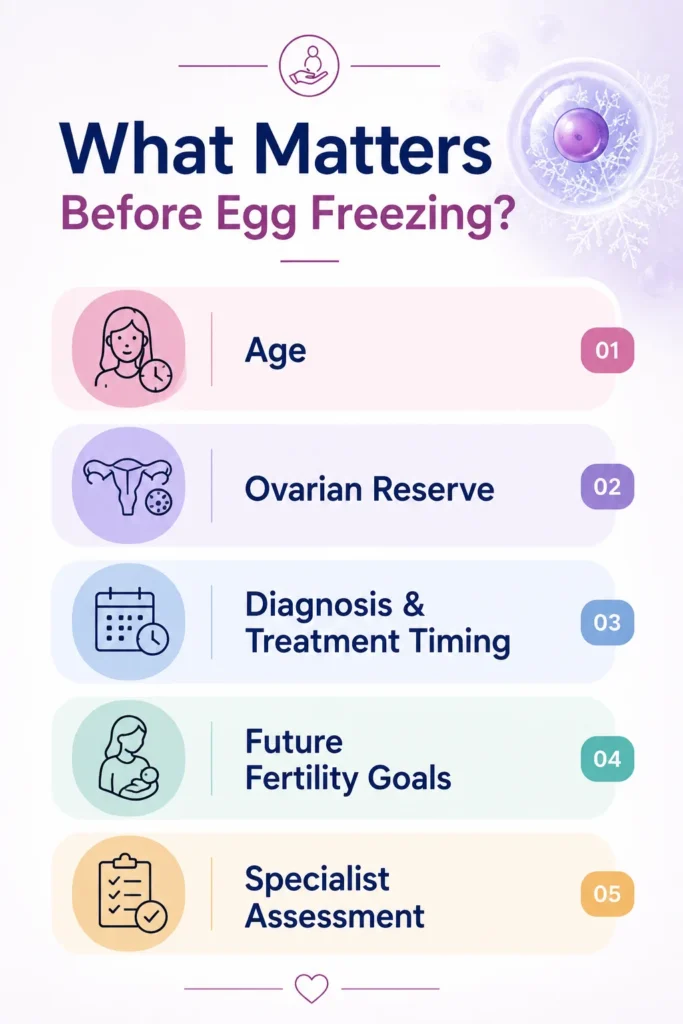
Preserving fertility before treatment is not limited to a cancer diagnosis, though that is the most urgent case. It is also worth discussing for women facing ovarian surgery, certain autoimmune conditions treated with gonad affecting drugs, or a family history of early menopause. Medical fertility preservation in Pune has grown alongside better cancer survival rates, since more young women now live well beyond treatment and want the option of a family afterward. Fertility preservation for women is now a routine part of pre treatment planning at an established IVF centre in Pune, not a niche request.
Choosing fertility preservation with egg freezing at this stage is rarely urgent in the medical sense, but the earlier it is discussed, the more options remain on the table.
Age plays a real role in how many eggs are likely to be retrieved and how many will survive freezing and thawing later. Ovarian reserve testing, usually a blood test and an ultrasound, gives a clear picture of what to expect from a single cycle. A woman in her twenties with a new diagnosis and a normal ovarian reserve is generally in the best position for this decision. A woman in her late thirties can still pursue it, though her care team will usually recommend collecting eggs across more than one cycle if time allows.
Up to three out of four cancer survivors say they want children after treatment, yet only a small fraction of women are ever offered fertility preservation before their treatment begins.
How Fertility Preservation With Egg Freezing Works, Step by Step
The process mirrors the early stages of IVF, and most patients complete it in ten to fourteen days from the first consultation to egg retrieval.
- An urgent referral from the oncologist or treating physician confirms the timeline available before treatment must start
- Baseline blood tests and a transvaginal ultrasound check ovarian reserve and rule out anything that would change the plan
- Daily hormone injections stimulate the ovaries to produce multiple eggs instead of the single egg released in a natural cycle
- Regular ultrasounds and blood tests track follicle growth so the retrieval is timed correctly
- A short procedure under sedation retrieves the mature eggs, usually taking under thirty minutes
- Viable eggs are frozen the same day through vitrification and stored until the patient is ready to use them
The NHS egg freezing guidance describes this same stimulation and monitoring process for women preserving fertility ahead of cancer treatment, which mirrors what patients in Wakad can expect from a well coordinated cycle.
Because chemotherapy and radiation schedules rarely allow for delay, clinics that handle these cases well are set up to move quickly. A referral received on a Monday can often mean egg retrieval within two weeks, which is fast enough to stay ahead of most treatment start dates. Where there is a partner and no time pressure on that decision, freezing eggs or embryos is worth settling first.
Egg Freezing or Embryo Freezing: Which Fits Your Situation
Both options start the same way, with ovarian stimulation and egg retrieval. The difference is what happens after retrieval.
- Egg freezing stores unfertilized eggs, suitable for women without a partner or donor sperm at the time of diagnosis
- Embryo freezing fertilizes the retrieved eggs with a partner’s or donor’s sperm before freezing, and is generally considered the more established option with a longer track record
- Egg freezing keeps every future option open, since fertilization can happen with any partner later
- Embryo freezing tends to survive the thawing process slightly more reliably, though modern vitrification has closed much of that gap for egg freezing too
Cleveland Clinic fertility preservation resources describe egg freezing as the better established path for women without a partner at the time of diagnosis, while embryo freezing remains the more studied option overall. Most single women facing a new diagnosis choose egg cryopreservation for exactly this reason. It postpones the decision about who to have a child with, while still protecting the biological option. Embryos are graded in a way eggs cannot be, which is the practical reason why embryo quality matters to this decision.
What Affects Your Chances Later
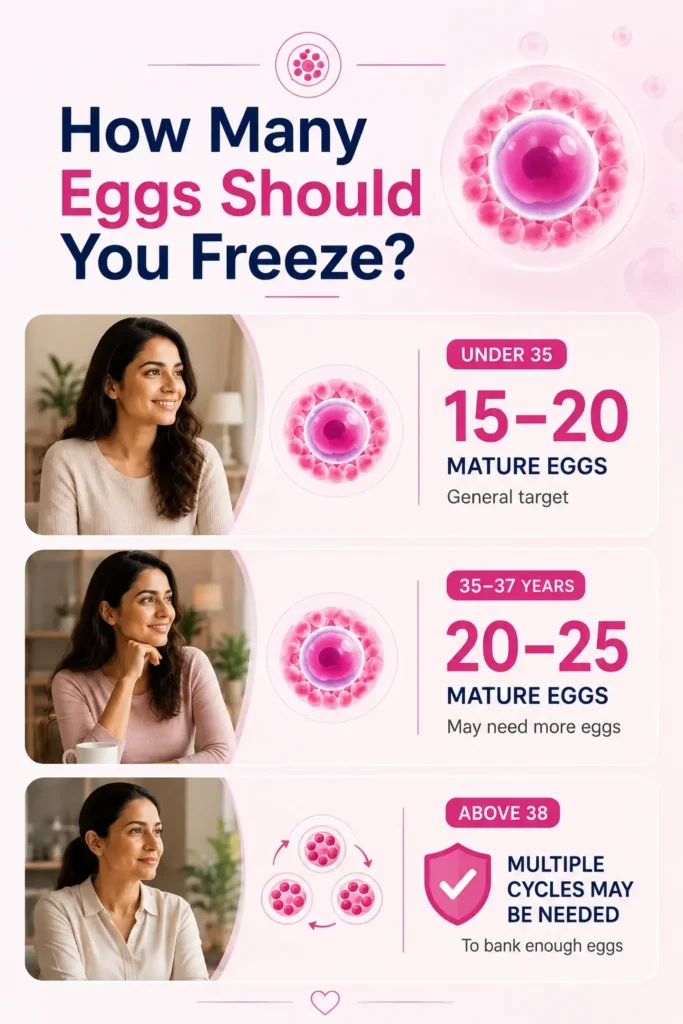
Several factors decide how useful frozen eggs will be years down the line, and understanding them now sets realistic expectations rather than false hope.
Age at the time of freezing is the single biggest factor. Number of eggs retrieved matters too, since not every frozen egg survives thawing and not every surviving egg fertilizes successfully. Most fertility specialists recommend collecting fifteen to twenty eggs across one or more cycles for a reasonable chance at a future live birth, though this varies by age and ovarian reserve. The type of cancer treatment planned also matters. Pelvic radiation, for example, can affect the uterus itself, which is a separate concern from egg quality and is worth asking about directly. None of these factors change whether fertility preservation with egg freezing is worth pursuing, only how many eggs a patient should aim to collect.
Talking to a Fertility Specialist in Wakad Before You Begin
The conversation about fertility preservation works best when it happens early, ideally on the same day as the diagnosis, so that timelines can be planned around the treatment schedule rather than around delay. A fertility specialist in Wakad can review the diagnosis, the treatment plan, and the time available, then recommend whether a single cycle is realistic or whether more than one round of retrieval makes sense.
For patients already being treated at an IVF centre in Wakad, coordinating fertility preservation alongside cancer care usually means faster communication between the oncology team and the fertility team, which shortens the time between diagnosis and egg retrieval. That coordination is often the difference between preserving fertility and missing the window entirely.
A diagnosis changes many plans at once, but fertility preservation with egg freezing gives patients in Wakad one decision they do not have to make under pressure. Eggs frozen today can wait years for a decision that has nothing to do with survival and everything to do with the family a patient still wants to build.
Frequently Asked Questions
Patients researching fertility preservation with egg freezing often have the same handful of questions once the initial shock of a diagnosis settles. The answers below cover what comes up most often.
1. Does egg freezing delay the start of cancer treatment?
In most cases, no. A typical egg freezing cycle takes ten to fourteen days from referral to retrieval, and clinics that work with cancer patients regularly prioritize these referrals to move as fast as possible. Some patients can begin the same week their oncologist refers them. There are situations, particularly with certain aggressive cancers, where even two weeks is too long to wait, and in those cases a fertility specialist will discuss alternatives such as ovarian tissue freezing instead. The right approach depends on the specific diagnosis and how urgently treatment needs to start, which is why an early conversation with both the oncologist and a fertility specialist matters so much.
2. How many eggs do I need to freeze for a realistic chance later?
There is no single number that guarantees success, but most specialists suggest collecting fifteen to twenty mature eggs for a reasonable chance at a future live birth. Younger patients often reach that number in a single cycle, while women in their late thirties may need two cycles to collect enough eggs, since fewer eggs are retrieved per cycle and fewer survive freezing and thawing at that age. Your fertility specialist will estimate a realistic number based on your ovarian reserve test results before you begin, so you know what to expect rather than guessing after the fact.
3. Can I still freeze my eggs if I do not have a partner?
Yes. Egg freezing was designed for exactly this situation. Unlike embryo freezing, which requires fertilizing the eggs with a partner’s or donor’s sperm before freezing, egg freezing stores unfertilized eggs. That means the decision about who to have a child with can wait until you are ready, whether that is years later with a partner or through donor sperm. This is one of the main reasons single women facing a new diagnosis choose egg freezing over embryo freezing.
4. Will fertility preservation affect my cancer treatment outcome?
Modern protocols are designed specifically so that fertility preservation does not compromise cancer treatment. The hormone medications used for egg stimulation are chosen with the specific cancer type in mind, and for hormone sensitive cancers such as certain breast cancers, specialists use alternative stimulation protocols that limit estrogen exposure. The short delay of ten to fourteen days needed for the cycle has not been shown to worsen outcomes for most cancer types when the fertility team and oncology team coordinate the timeline properly.
5. What happens to my frozen eggs if I never use them?
Frozen eggs remain in storage for as long as you choose to pay the storage fee, and most clinics review consent and storage terms with patients yearly or every few years. If you decide you no longer want to pursue pregnancy with them, you can choose to have them discarded, donated for research, or in some cases donated to another patient, depending on the clinic’s policies and your own wishes. There is no requirement to use frozen eggs by a certain deadline in most cases, though it is worth confirming your specific clinic’s storage limit when you begin.
6. Is egg freezing painful or does it require major surgery?
The egg retrieval procedure itself is done under sedation and typically takes under thirty minutes, so patients do not feel it happening. The two weeks leading up to retrieval involve daily hormone injections, which most patients describe as a minor discomfort rather than significant pain, along with some bloating as the ovaries respond to stimulation. Recovery from the retrieval procedure is usually a day or two of rest before returning to normal activity, though this can vary depending on your overall health and treatment plan.
7. How much does egg freezing cost in Wakad?
Costs vary depending on the number of stimulation cycles needed, the medication protocol, and ongoing storage fees, so it is best to get a direct quote from your clinic once your treatment plan and timeline are clear. Some clinics offer priority scheduling and adjusted planning for cancer patients specifically, given the time sensitive nature of the referral. It is worth asking directly during your first consultation what the full cost includes, including storage for the first year and any fees for years after that.
8. Does age affect whether egg freezing is worth doing?
Age affects the outcome, not whether it is worth doing. Younger patients generally retrieve more eggs per cycle and those eggs tend to survive freezing and thawing more reliably, but women in their late thirties and even early forties still benefit from freezing eggs before treatment compared to not freezing at all. The eggs frozen today keep the age they were on the day of retrieval, so even a woman in her late thirties preserves a meaningfully better chance than waiting until after treatment and trying to conceive naturally years later.
9. Can egg freezing be done quickly enough for an urgent diagnosis?
Yes, in most cases. Clinics experienced with cancer referrals can often begin the stimulation process within a day or two of receiving the referral, and the full cycle from first appointment to retrieval usually takes ten to fourteen days. If your treatment truly cannot wait even that long, your fertility specialist may discuss ovarian tissue freezing, which can sometimes be done during an existing surgery such as a biopsy or port placement, removing the need for a separate stimulation cycle.
10. What is the difference between egg freezing and ovarian tissue freezing?
Egg freezing requires two weeks of hormone stimulation followed by a retrieval procedure, and stores individual mature eggs. Ovarian tissue freezing removes and freezes a piece of ovarian tissue containing thousands of immature eggs, and can be done quickly, sometimes during another planned surgery, without the two week stimulation period. Egg freezing remains the more established option with a longer track record, while ovarian tissue freezing is generally reserved for patients who cannot wait for a stimulation cycle or who have not yet reached puberty. Your specialist will recommend the option that fits your specific timeline and diagnosis.
11. How long can frozen eggs actually stay frozen before they need to be used?
There is no biological expiry date once eggs are properly vitrified. Storage in liquid nitrogen essentially pauses the aging process for the egg itself, and cases of successful pregnancies from eggs frozen well over a decade earlier are already on record. What actually limits storage in practice is not biology but policy, since clinics set their own storage terms and some countries cap how long a facility can legally hold frozen eggs before requiring renewed consent or a decision from the patient. It is worth asking your specific clinic what their storage limit is and how consent gets renewed over time, rather than assuming eggs can simply sit in storage indefinitely without any check in.
12. Is it true that eggs are wasted every month, so freezing sooner is better?
Not quite, though the instinct behind the question is reasonable. Each month, a woman naturally loses far more eggs than the single one released at ovulation, since that egg is selected from a larger group that starts developing and then reabsorbs the rest regardless of whether a period happens or a pregnancy is attempted. Freezing does not rescue those specific eggs from being lost that month. What freezing does is capture a larger batch of eggs during one stimulated cycle and preserve them at whatever age and quality they were at that point, rather than letting the natural monthly decline continue untouched. So the sooner is better logic holds, just for a different reason: egg quality and quantity decline with age, not because any single month’s egg was wasted. This is why fertility preservation with egg freezing is usually recommended as early as possible after a diagnosis.
13. Up to what age can a woman still freeze her eggs?
There is no fixed legal cutoff at most clinics, but there is a practical one set by biology. Egg quantity and quality both decline with age, and that decline accelerates after the mid thirties, so a woman in her early forties will typically retrieve fewer eggs per cycle than she would have a decade earlier, and a smaller share of those eggs are likely to be chromosomally normal. This does not mean freezing after forty is pointless, only that expectations should be set through an honest ovarian reserve test rather than an age number alone. Your fertility specialist can tell you, based on your own test results, whether one cycle is likely to be enough or whether more than one round of retrieval makes sense for you specifically.
14. Are frozen eggs used later through IVF, or is it a separate process?
Frozen eggs are used through IVF, not as a separate procedure. When a patient is ready to try for pregnancy, the stored eggs are thawed, fertilized in the lab using a technique called ICSI where a single sperm is injected directly into each egg, and the resulting embryos are monitored for a few days before one is transferred into the uterus. This is essentially the second half of a standard IVF cycle, just using eggs that were collected and frozen months or years earlier instead of eggs collected fresh in that same cycle. Patients sometimes assume egg freezing and IVF are two unrelated paths, but freezing is really the first stage of an IVF process that gets paused and picked up again later, on the patient’s own timeline.
15. Does having a fibroid mean surgery is needed before eggs can be frozen?
Not always. Whether a fibroid affects egg freezing depends mainly on its size, number, and location rather than its presence alone. A small fibroid sitting outside the uterine cavity often has little effect on ovarian stimulation or egg retrieval, and many patients proceed with freezing without any fibroid related treatment first. A large fibroid, one that distorts the uterine cavity, or one located close to an ovary is more likely to prompt a specialist to recommend addressing it before or alongside the freezing cycle, particularly if it could complicate the retrieval procedure itself. An ultrasound early in the consultation usually gives your specialist enough information to advise whether surgery should come first or whether fertility preservation with egg freezing can proceed as planned right away.