
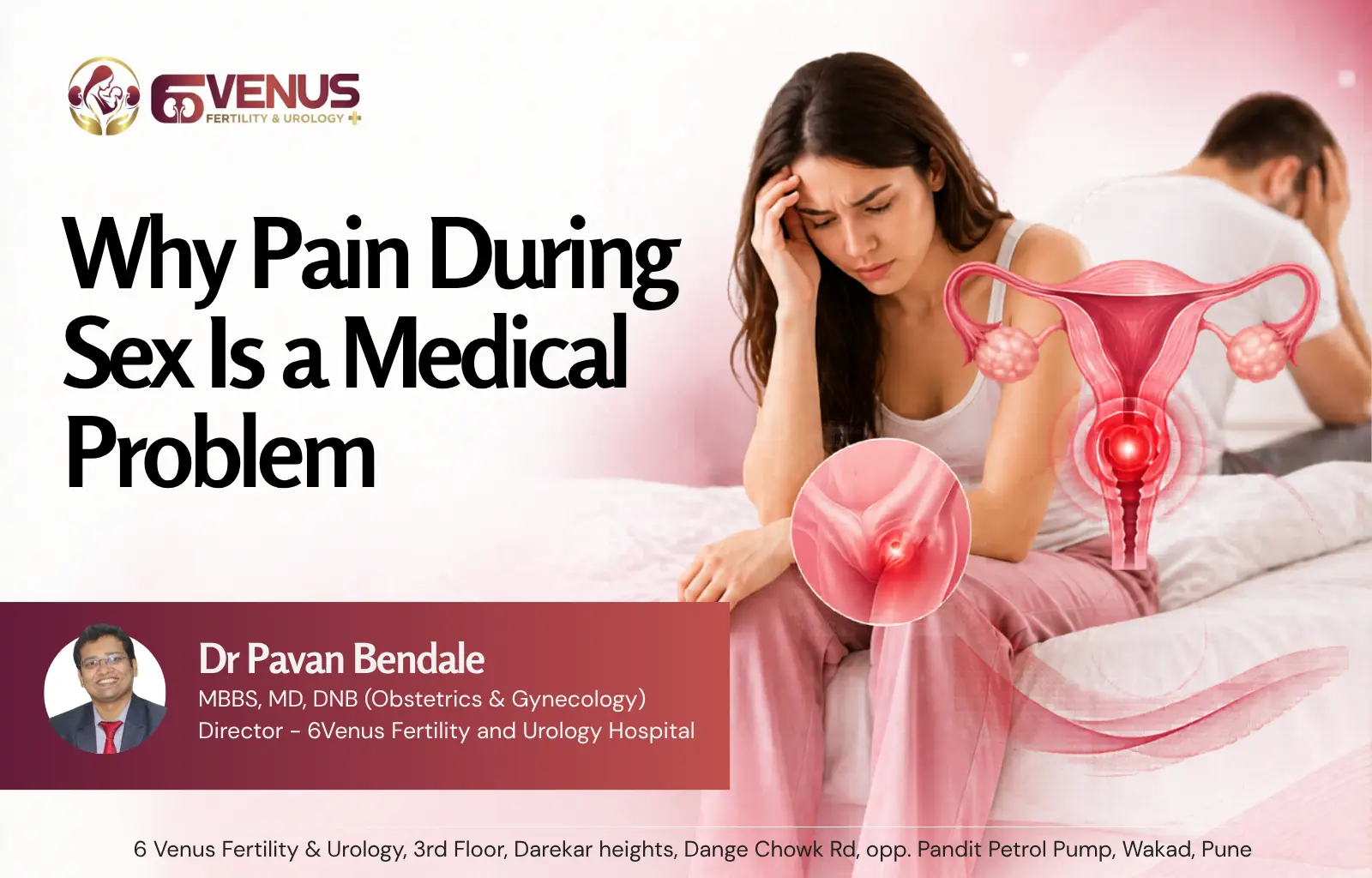
Globally, between 10 and 20 percent of women experience painful intercourse at some point in their reproductive lives. The WHO has recorded a prevalence range of 8 to 21 percent across countries, with variation linked to how the condition is defined and how openly women in different populations report it. In India, where conversations about sexual pain remain heavily stigmatised, the actual prevalence is almost certainly higher than reported figures suggest. Many women in Wakad, Hinjewadi, and across PCMC who experience pain during intercourse manage it silently for months or years, assuming it is normal, assuming their bodies are somehow different, or simply not knowing that gynaecological treatment for this condition exists and is effective.
Pain during intercourse is not something to endure. It has a name, dyspareunia, it has identifiable causes, and the vast majority of those causes are treatable with the right diagnosis. Dr. Pavan Bendale, MBBS, DGO, DNB Obstetrics and Gynaecology, and Fellowship in Reproductive Medicine at 6Venus Fertility and Urology Hospital in Wakad, sees women with painful intercourse as part of his gynaecological and fertility practice. For women where the pain is connected to an underlying fertility condition, that connection is addressed in the same consultation.
Entry Pain vs Deep Pain: Why Where the Pain Occurs Tells You What Is Causing It
The single most useful piece of information a woman can bring to a consultation for painful intercourse treatment in Wakad is a clear description of where exactly the pain is felt and when it occurs.
Dyspareunia is clinically divided into two types based on location:
Superficial or entry dyspareunia is pain at or near the vaginal opening at the time of attempted penetration. It is felt at the entrance, the vulva, or the lower vagina. This type of pain typically points toward:
- Vaginal dryness or insufficient lubrication
- Vaginismus (involuntary tightening of the pelvic floor muscles)
- Vulvodynia or vestibulodynia (chronic vulvar pain without an obvious cause)
- Active vaginal infection including yeast infection or bacterial vaginosis
- Skin conditions of the vulva such as lichen sclerosus or lichen planus
- Scar tissue from episiotomy, perineal tears, or prior surgery
- Postpartum changes in vaginal tissue
Deep dyspareunia is pain felt deeper in the vagina or within the pelvis during or after penetration. This type points toward internal gynaecological pathology:
- Endometriosis, particularly in the posterior cul-de-sac
- Uterine fibroids, especially submucosal or posterior fibroids
- Ovarian cysts
- Pelvic inflammatory disease (PID) or pelvic adhesions
- Adenomyosis
- Retroverted uterus (uterus tilted backward), which causes impact pain in certain positions
- Interstitial cystitis causing bladder pain during penetration
Some women experience both types simultaneously. A study published in the Archives of Gynecology and Obstetrics found that among 334 women with endometriosis, 75.7 percent reported dyspareunia, with 43.4 percent experiencing both entry and deep pain at the same time. Women with concomitant pain reported significantly worse quality of life and sexual function than those with only one type. This dual presentation is more difficult to manage and requires investigation of both entry-level and deep causes before any treatment plan is finalised.
Vaginismus: When the Body Responds With Protective Tension That Becomes the Problem
Vaginismus is one of the most common, most undertreated, and most misunderstood causes of painful intercourse in younger women across India. It is an involuntary contraction of the pelvic floor muscles surrounding the outer third of the vagina that occurs in anticipation of or during attempted penetration. The muscle contraction is not under the woman’s conscious control. It is a reflexive response, often developed from a prior painful experience, anxiety, fear of penetration, or psychological factors related to cultural conditioning around sex.
What vaginismus feels like:
- Penetration feels impossible or extremely difficult, even with significant effort
- Burning, stinging, or a sensation of hitting a wall at the vaginal entrance
- Muscle tension visible or palpable in the thighs, abdomen, or pelvic region
- Difficulty or complete inability to use tampons or allow a gynaecological examination
- No pain outside of penetration attempts in most cases
Vaginismus affects couples’ ability to conceive naturally. Many women presenting for fertility evaluation at 6Venus in Wakad have undiagnosed vaginismus that has prevented regular intercourse for months or years, which is the actual barrier to pregnancy rather than any pathological fertility problem. Treating the vaginismus resolves the barrier to natural conception in many cases. Where IVF is needed for other reasons, vaginismus also creates challenges for vaginal procedures including transvaginal ultrasound and egg retrieval, which require early management.
Vaginismus treatment is non-surgical and highly effective:
- Pelvic floor physiotherapy: a specialised physiotherapist trained in pelvic floor conditions guides the woman through progressive muscle relaxation exercises, desensitisation techniques, and internal assessment and treatment of hypertonic pelvic floor muscles
- Vaginal dilator therapy: a graduated series of smooth dilators of increasing diameter are used at home to progressively and gently stretch the vaginal entrance and retrain the pelvic floor muscle response. The process is slow, private, and fully under the woman’s control
- Psychosexual counselling: particularly when vaginismus is linked to prior trauma, anxiety, or relationship dynamics, counselling alongside physical treatment produces significantly better and more durable outcomes
- Botulinum toxin injection: in cases of severe vaginismus that do not respond to physiotherapy and dilator therapy, botulinum toxin injected into the pubococcygeus muscle temporarily reduces the involuntary muscle contraction, allowing the dilator and physiotherapy programme to progress. This is a specialist procedure done under short anaesthesia
Endometriosis and Deep Painful Intercourse in Wakad: The Most Commonly Missed Diagnosis
Endometriosis is tissue similar to the uterine lining growing outside the uterus, most commonly on the ovaries, fallopian tubes, the pouch of Douglas (posterior cul-de-sac), and the uterosacral ligaments. When these deposits are in the posterior cul-de-sac, deep penetration during intercourse directly compresses the affected tissue, causing severe deep pain that is often described as sharp, cramping, or a deep ache that persists for hours after intercourse.
Globally, 45 percent of women with surgically confirmed endometriosis report deep dyspareunia (NIH StatPearls data). Among infertile Indian women undergoing laparoscopy, research from South India found that 56.5 percent of those diagnosed with endometriosis had dyspareunia compared to 31.3 percent in the control group, a statistically significant difference.
Why endometriosis is commonly missed in women presenting with painful intercourse in Wakad:
- The average diagnostic delay for endometriosis in India is 7 to 10 years from the onset of symptoms
- Deep painful intercourse is often normalised by general practitioners or dismissed as psychological
- Routine pelvic ultrasound misses peritoneal and superficial endometriosis deposits; only laparoscopy or MRI reliably detects all forms
- Women who also have painful periods (dysmenorrhea), chronic pelvic pain, and difficulty conceiving have a combined picture that strongly suggests endometriosis, but individual symptoms are often investigated separately without connecting them
If you have all three of the following, you should be evaluated for endometriosis:
- Pain during intercourse, particularly deep pain in certain positions
- Painful or very heavy periods
- Difficulty conceiving after 6 to 12 months of regular intercourse
At 6Venus in Wakad, Dr. Pavan Bendale has specific expertise in laparoscopic surgery for endometriosis. Laparoscopy serves both as the definitive diagnostic test and the primary surgical treatment, where endometriotic deposits, ovarian cysts (endometriomas), and adhesions can be excised during the same procedure. For women with endometriosis whose painful intercourse is also connected to infertility, the management combines surgical treatment with a carefully planned fertility strategy, either allowing a window for natural conception post-surgery or proceeding directly to IVF depending on the severity of disease and the woman’s age and ovarian reserve.
Vaginal Dryness and Painful Intercourse: More Common in Wakad’s Population Than Most Realise
Vaginal dryness is the most straightforward but also one of the most undertreated causes of entry-level painful intercourse. It occurs when the vaginal walls produce insufficient natural lubrication, creating friction during intercourse that ranges from mild discomfort to genuinely sharp, burning pain.
Causes in women of all ages seen at 6Venus Wakad:
- Hormonal contraceptives: low-dose combined pills and progestogen-only pills can significantly reduce vaginal lubrication in some women by suppressing oestrogen-dependent vaginal secretion
- Breastfeeding: high prolactin and suppressed oestrogen during lactation causes atrophic changes in vaginal tissue and dryness that can be severe in the first 3 to 6 months postpartum
- Perimenopause and menopause: oestrogen decline directly causes vaginal atrophy including dryness, thinning of vaginal walls, and reduced elasticity. Genitourinary syndrome of menopause (GSM) affects up to 50 percent of post-menopausal women
- Post-IVF or fertility treatment cycles: GnRH agonist protocols used in some IVF cycles suppress oestrogen and cause temporary vaginal dryness and dyspareunia during the treatment cycle
- Antihistamines, antidepressants, and some blood pressure medications: several commonly used medications reduce vaginal secretions as a side effect
- Anxiety and psychological stress: the arousal response that produces natural lubrication is directly inhibited by anxiety, which is physiologically relevant even when there is no structural dryness
Treatment is targeted to the cause:
- Non-hormonal vaginal moisturisers for regular use (not just before intercourse) restore baseline vaginal moisture
- Personal lubricants used during intercourse reduce friction immediately and effectively
- Local vaginal oestrogen (cream, ring, or pessary) is the most effective treatment for postmenopausal vaginal atrophy and is safe for the vast majority of women, including those who cannot use systemic hormone therapy
- Reviewing and adjusting hormonal contraception where dryness is a documented side effect
Painful Intercourse After Delivery in Wakad: Postpartum Dyspareunia and Why It Needs Attention
Postpartum dyspareunia is among the most prevalent and least discussed forms of painful intercourse. Research shows a prevalence of approximately 45 percent at 2 months postpartum and 43 percent between 2 and 6 months postpartum. Despite this, the vast majority of postpartum women do not bring it up at their six-week review, and many doctors do not ask.
Why postpartum intercourse becomes painful:
- Perineal tears or episiotomy scars that have healed with sensitivity or scar tissue tightness
- Breastfeeding-related oestrogen suppression causing vaginal dryness and atrophy
- Pelvic floor muscle weakness or spasm following vaginal delivery
- Psychological fatigue, sleep deprivation, and anxiety around the new baby reducing arousal and lubrication
- Caesarean section scar sensitivity that causes traction pain during deeper penetration
Postpartum dyspareunia is not something to endure until it resolves on its own, and for many women it does not resolve without targeted treatment. At 6Venus, the postnatal review at 6 weeks specifically covers sexual health and return to intercourse, and women who report pain are assessed rather than reassured without examination. Pelvic floor physiotherapy referral, local lubricant guidance, and if needed, scar assessment are part of the postpartum care pathway.
Painful Intercourse and Fertility: Why They Need to Be Investigated Together in Wakad
Painful intercourse and infertility frequently coexist because many of the conditions causing pain, endometriosis, fibroids, pelvic adhesions, and PID damage, also damage fertility. This means that a woman presenting with painful intercourse in her late 20s or early 30s who also wants to start a family deserves an investigation that looks at both problems together, not separately at two different referral pathways.
At 6Venus, a woman presenting with painful intercourse who is also trying to conceive is evaluated with:
- Transvaginal ultrasound to assess uterine structure, ovarian cysts, and free pelvic fluid
- AMH and Day 2 hormonal panel to assess ovarian reserve
- HSG if tubal assessment is needed, particularly when endometriosis or PID history is present
- Laparoscopy when endometriosis or adhesions are suspected and need to be both diagnosed and treated
- Assessment for blocked fallopian tubes, which are a common consequence of endometriosis and PID and a frequent cause of infertility alongside painful intercourse
The integrated approach means that a single laparoscopy can simultaneously confirm endometriosis, assess the tubes, remove deposits, and free adhesions, after which a fertility plan is developed based on the findings. Women who have suffered from painful intercourse for years and are now struggling to conceive often find that the laparoscopy is the single most important diagnostic and therapeutic step in their entire journey. You can read more about how fertility treatment success factors are assessed at 6Venus, including how endometriosis and pelvic pathology are managed before IVF.
When Painful Intercourse Needs Laparoscopy: How Dr. Pavan Bendale Decides
Not every woman with painful intercourse needs surgery. The decision depends entirely on the clinical picture.
Laparoscopy is indicated when:
- Deep dyspareunia is present and endometriosis or pelvic adhesions are suspected on clinical examination or ultrasound
- There is a history of pelvic inflammatory disease and posterior cul-de-sac tenderness on examination
- Ovarian cysts are identified that may be endometriomas requiring surgical management
- Painful intercourse is combined with unexplained infertility after a complete non-surgical workup
- Medical treatment for endometriosis has failed to provide adequate pain relief
Laparoscopy is not immediately indicated when:
- Entry-level pain alone is present with features of vaginismus or dryness
- A clear infectious or hormonal cause has been identified and not yet treated
- Postpartum dyspareunia is the primary presentation with no other gynaecological findings
- The woman has not completed a trial of medical management where appropriate
According to NHS clinical guidance on painful sex in women, investigation should be pursued for any persistent pain rather than assuming a psychological cause or recommending lubricants without examination. The stigma that painful intercourse carries, particularly in Indian society, should not delay appropriate clinical evaluation. Pain during sex is a medical symptom, and it deserves a medical response.
Women in Wakad, Hinjewadi, Marunji, Baner, Thergaon, and across PCMC who experience pain during intercourse, whether at entry, deep, or both, are encouraged to book a direct consultation with Dr. Pavan Bendale at 6Venus Fertility and Urology Hospital on Dange Chowk Road, Wakad. Consultations are private, non-judgmental, and clinically thorough. No referral is needed. The goal is a diagnosis before a prescription, and a treatment plan that addresses both the pain and any related fertility concern in a single integrated pathway.
Frequently Asked Questions: Painful Intercourse Treatment in Wakad
1. Is pain during intercourse normal for women in Wakad?
No. Pain during intercourse is never medically normal. Some level of discomfort in the very first experiences of penetration is common, but persistent, recurring, or worsening pain at any age has a cause that can be identified and treated. Between 10 and 20 percent of women experience dyspareunia, and the majority have a diagnosable physical cause including vaginal dryness, vaginismus, endometriosis, or infection. None of these are conditions to simply live with. Accepting pain during intercourse as normal delays effective treatment by months or years in many cases.
2. Which doctor should I see for painful intercourse in Wakad?
A gynaecologist is the first and most appropriate doctor for painful intercourse in women. Dr. Pavan Bendale at 6Venus Fertility and Urology Hospital in Wakad is a DNB-qualified gynaecologist and fertility specialist who evaluates and treats dyspareunia in women across PCMC, Hinjewadi, and Pune’s west corridor. If the pain is also connected to difficulty conceiving, the fertility and gynaecological investigation can be done simultaneously at the same consultation. No referral from another doctor is needed to book directly at 6Venus.
3. Can painful intercourse be a sign of endometriosis in Wakad?
Yes, and it is one of the most important warning signs. Deep pain during intercourse, particularly in certain positions where penetration is deepest, is one of the hallmark symptoms of endometriosis. When combined with painful or heavy periods and difficulty conceiving, the combination is highly suggestive of endometriosis. The condition is severely underdiagnosed in India, with average diagnostic delays of 7 to 10 years. Any woman in Wakad with this symptom triad should request a specialist gynaecology evaluation rather than waiting for a routine referral.
4. What is vaginismus and can it be treated without surgery in Wakad?
Vaginismus is an involuntary contraction of the pelvic floor muscles that makes vaginal penetration painful or impossible. It is not under conscious control. It is treated without surgery in the overwhelming majority of cases, using a structured programme of pelvic floor physiotherapy, progressive vaginal dilator therapy, and psychosexual counselling where needed. The treatment is gradual and entirely private. Success rates for vaginismus when treated with a structured programme are high, and most women achieve pain-free intercourse within weeks to months of starting treatment. In rare severe cases, botulinum toxin injection is used to supplement the programme.
5. Can painful intercourse be caused by using an IUD or contraceptive pill?
A hormonal IUD (Mirena) or implant rarely causes direct intercourse pain, though the strings of a copper IUD can occasionally be felt by a partner if too long. Low-dose combined pills and progestogen-only pills can reduce vaginal lubrication in some women, causing dryness and entry-level pain during intercourse. If painful intercourse began or worsened after starting a particular contraceptive, this should be discussed with a gynaecologist. A change in contraceptive method or the addition of vaginal lubricants often resolves the problem quickly.
6. Why does sex hurt after my caesarean or normal delivery in Wakad?
Postpartum dyspareunia is extremely common. After a vaginal delivery, perineal tears and episiotomy scars can cause entry pain, particularly if the scar has healed with tightness or has a hypersensitive nerve ending. Breastfeeding suppresses oestrogen, causing vaginal dryness and atrophy that creates friction pain during intercourse. After a caesarean section, internal scarring can cause deep pain during penetration due to traction on the scar. These are all treatable conditions. Using lubricants, pelvic floor physiotherapy, and in some cases local oestrogen cream significantly reduces postpartum dyspareunia. The right time to discuss this is at the 6-week postnatal review, not after another year of avoiding intercourse.
7. Does painful intercourse affect fertility and IVF outcomes in Wakad?
Yes, in multiple ways. If painful intercourse prevents regular sexual intercourse, natural conception becomes impossible regardless of how healthy both partners’ reproductive systems are. Beyond that, conditions causing painful intercourse, particularly endometriosis, pelvic adhesions, and fibroids, directly damage fertility by distorting tubal anatomy, creating a hostile pelvic environment for embryo implantation, or causing adhesions around the ovaries. Women undergoing IVF who have untreated endometriosis have lower implantation rates than those whose disease has been surgically managed. Treating the cause of painful intercourse is therefore not separate from fertility treatment; it is often a prerequisite for it.
8. How is painful intercourse diagnosed at 6Venus Wakad?
Diagnosis begins with a thorough clinical history covering where the pain is located, when it occurs, how long it has been present, whether it is worsening, and what makes it better or worse. A gynaecological examination assessing the vulva, vaginal walls, cervix, and uterine position is essential. A transvaginal ultrasound checks for fibroids, ovarian cysts, and pelvic fluid. If endometriosis or adhesions are suspected, an MRI or diagnostic laparoscopy may be recommended. Vaginal swab testing rules out active infection. Blood tests assess hormone levels where dryness or perimenopause is suspected. The investigation is tailored to the clinical picture, not applied as a blanket protocol to every patient.
9. What is the treatment for painful intercourse caused by fibroids in Wakad?
Fibroids causing painful intercourse are usually large or positioned in a way that creates pressure or discomfort during deep penetration. Small fibroids that are not causing symptoms do not require treatment. Symptomatic fibroids are managed with either medical hormone therapy to shrink them temporarily or surgical removal. Myomectomy, the surgical removal of fibroids while preserving the uterus, is the preferred approach for women who want to conceive. Dr. Pavan Bendale performs laparoscopic myomectomy at 6Venus for women in Wakad and across PCMC. For women who do not want fertility preservation, other interventional options including uterine artery embolisation may be considered depending on fibroid size, number, and location.
10. How much does painful intercourse treatment cost at 6Venus Wakad?
The cost depends entirely on the diagnosis and the treatment required. A gynaecology consultation with Dr. Pavan Bendale is the starting point, after which any investigations, including ultrasound, blood tests, or vaginal swab, are quoted before being ordered. Physiotherapy referral, medical treatment, and surgical options each carry different costs that are discussed transparently before anything is scheduled. For women also undergoing fertility evaluation, the consultation may be integrated into the overall workup. Contact 6Venus Fertility and Urology Hospital on Dange Chowk Road, Wakad directly for current consultation fees. For details on combined fertility and gynaecology treatment costs at 6Venus Wakad, the clinic can provide a personalised estimate based on your specific clinical requirements.