

A 32 year old software engineer in Hinjewadi walked into a fertility clinic last year, not because he was struggling to conceive, but because his father had gone through infertility treatment at 45 and he wanted a different outcome for himself. That single decision, made a decade before most men even think about it, is exactly the kind of thinking behind sperm freezing before 40 in Wakad.
Men produce new sperm every day of their lives, which is why the idea of a male biological clock still surprises many patients. But sperm quality and age are more closely linked than most people realize. Quality is not fixed. It shifts with age, health, and lifestyle, and the shift usually starts earlier than expected.
Why Freezing Sperm Before 40 in Wakad Deserves a Serious Look
Sperm freezing, also called sperm cryopreservation, is the process of collecting, testing, and storing a semen sample at extremely low temperatures so it can be used later for IUI, IVF, or ICSI. The sample is thawed only when the patient is ready to try for a pregnancy, sometimes years after it was frozen.
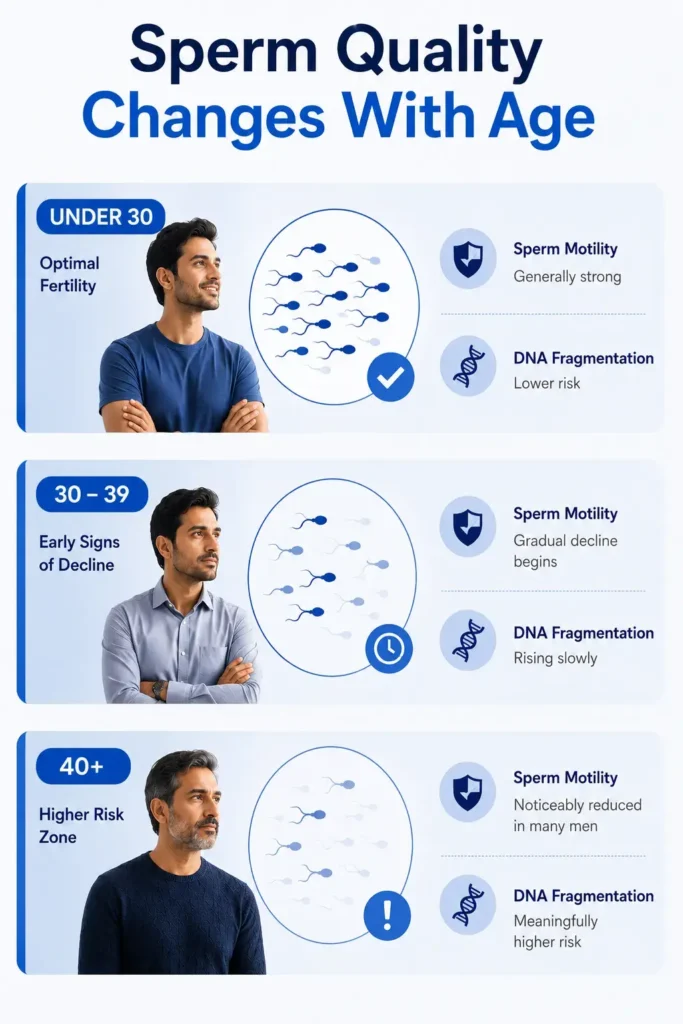
Research on paternal age backs up why timing matters. A large scale study of over six thousand semen samples found that sperm volume, progressive motility, and total motility declined significantly as male age increased, while sperm DNA fragmentation rose in step sperm and age research. This is what doctors mean when they talk about male fertility after 40. It is not a cliff edge, but a gradual slope that starts earlier than most men assume.
Cleveland Clinic describes fertility preservation care as a way for men to bank healthier sperm before treatment, illness, or age changes the picture, which is exactly the reasoning behind Egg and Sperm Freezing done proactively rather than as an afterthought.
| Age Group | Typical Sperm Motility Trend | DNA Fragmentation Risk |
|---|---|---|
| Under 30 | Generally strong | Lower |
| 30 to 39 | Gradual decline begins | Rising slowly |
| 40 and above | Noticeably reduced in many men | Meaningfully higher |
None of this means a man over 40 cannot father a healthy child. Most do. But the odds shift, and freezing sperm while quality is at its best removes a variable that cannot be recovered later.
Who in Wakad Actually Benefits From Freezing Sperm Early
The patients who ask about this most often fall into a few clear groups.
- Men in their early or mid thirties who are not yet ready for children but want to protect their options
- IT professionals in the Hinjewadi and Wakad corridor working long, high stress hours that can affect semen parameters over time
- Men about to start treatment for cancer, an autoimmune condition, or a surgery that could affect fertility
- Men who already have a low or borderline count on a semen analysis and want to bank the healthiest sample available now
- Couples delaying parenthood for career or financial reasons who still want the male partner’s fertility preserved at a younger age
Male fertility preservation is no longer something patients only consider after a cancer diagnosis. Increasingly, men in Wakad are treating it the way women have long treated egg freezing: as a proactive step rather than a last resort.
The pattern shows up across the wider region too. Clinics tracking sperm freezing by age in Pune report that requests from men under 35 have grown steadily over the past few years, a shift that mirrors global data on delayed parenthood. Lifestyle plays a role alongside age. Long sitting hours, high stress jobs, smoking, and poor sleep can all lower sperm quality faster than age alone would, which is one more reason younger men are choosing to bank a sample while their numbers are strongest rather than waiting to see how the next decade treats them.
What a Sperm Freezing Consultation in Wakad Actually Involves
Once a man decides to move forward with freezing sperm before 40 in Wakad, the actual appointment tends to be far simpler than the decision leading up to it.
- A consultation with a urologist to review medical history and any current fertility concerns
- A semen analysis test to check count, motility, and morphology before freezing
- Where indicated, a sperm DNA fragmentation test to assess genetic quality of the sample
- Sample collection at the clinic, usually after two to five days of abstinence
- Cryopreservation and secure, long term storage of the frozen sample
Most men complete the entire process in a single visit unless additional testing is recommended based on the first semen analysis.
Studies on advanced paternal age report that men over 40 have roughly a thirty percent lower chance of conceiving within a year compared with men under 30, even when the female partner’s age is accounted for.
How Long Frozen Sperm Lasts and What It Actually Costs
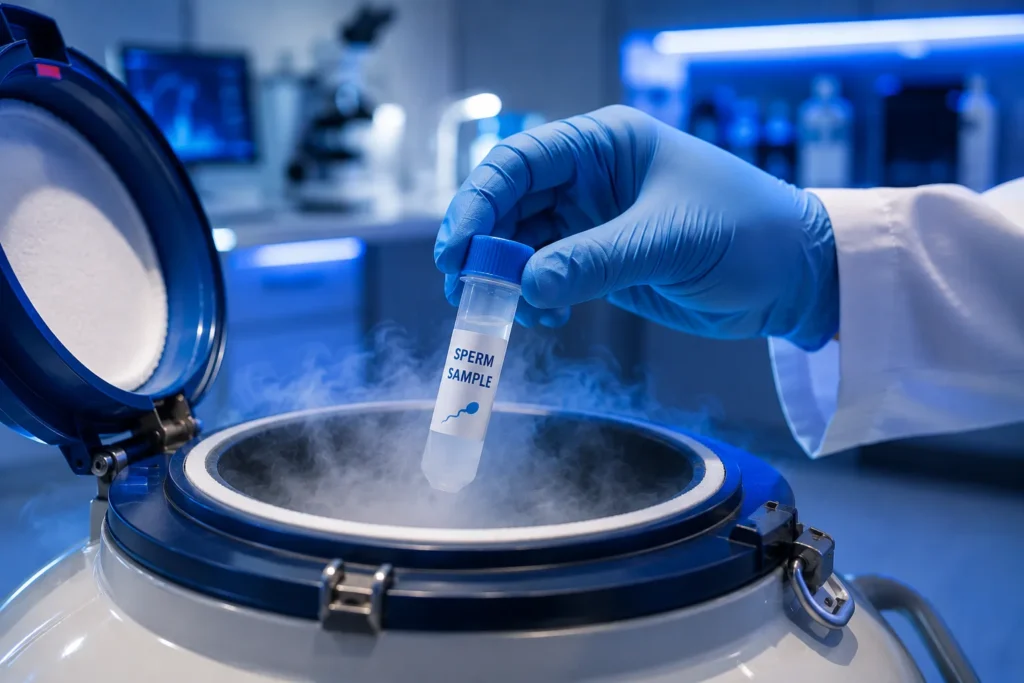
Frozen sperm can remain viable for many years when stored correctly, and pregnancies have been achieved using samples frozen well over a decade earlier. Storage is billed as an annual fee on top of the initial freezing and testing cost, and most clinics in the Wakad and Pimpri Chinchwad area offer flexible renewal terms.
Cost varies depending on how many samples are frozen and whether additional testing such as DNA fragmentation analysis is included. A proper consultation will always break this down clearly rather than quoting a single flat number, since every patient’s testing needs differ. Male infertility specialists generally recommend treating any underlying issue found on testing before or alongside freezing, rather than freezing a sample and leaving a fixable problem unaddressed.
Patients sometimes ask whether it makes more financial sense to wait and freeze later, closer to when they actually plan to have children. In practice, the opposite tends to be true. A younger sample often needs fewer freezing attempts and less additional testing, which can offset the cost of storing it for a few extra years.
Choosing a Sperm Freezing Clinic in Wakad or Pune
Men researching sperm freezing before 40 in Wakad usually start with a simple question: does this clinic actually test what it freezes, or does it just store whatever sample walks in the door.
Not every lab that offers freezing also offers proper pre freeze testing, and that testing matters. A urologist in Pune who reviews the semen analysis before freezing can flag issues, such as poor motility or high fragmentation, that a patient would otherwise never know about until years later when it is too late to act on them.
When comparing a sperm freezing clinic in Wakad against options elsewhere in Pune or Pimpri Chinchwad, ask about the storage facility’s track record, whether a fertility specialist reviews every sample personally, and what happens to the sample if testing reveals a fertility concern that needs treatment first.
The decision to freeze sperm before 40 in Wakad is rarely urgent in the way a medical emergency is urgent. But it is time sensitive in a quieter way. Every year of waiting is a year sperm quality has the chance to decline a little further, and that is not a variable anyone can pause once it starts moving.
Frequently Asked Questions
1. At what age should a man consider freezing his sperm?
Most fertility specialists suggest considering it in the early to mid thirties, before the more noticeable decline in motility and DNA integrity that tends to show up after 40. There is no single correct age for every patient, and men with a family history of fertility problems, or those facing medical treatment that could affect sperm, are often advised to consider it earlier.
2. Does freezing sperm damage or weaken it?
A small percentage of sperm do not survive the freezing and thawing process, which is normal and expected. Clinics account for this by collecting a sample large enough to leave a usable quantity after thawing. The sperm that do survive generally retain their motility and fertilizing ability.
3. Is sperm freezing painful or invasive?
No. The sample is collected the same way a semen analysis sample is collected, in a private room at the clinic. There is no surgery involved unless a man has no sperm in his ejaculate and needs a retrieval procedure instead.
4. How long can frozen sperm be stored before it becomes unusable?
When stored correctly at the right temperature, frozen sperm does not have a hard expiration date. Pregnancies have resulted from samples frozen for well over ten years. Clinics typically charge an annual storage fee to keep the sample viable indefinitely.
5. Do I need a semen analysis before I can freeze my sperm?
Yes. A semen analysis is done first to check count, motility, and morphology, which helps the clinic understand what to expect from the sample and whether any treatment should happen before freezing rather than after.
6. Can sperm freezing help if my semen analysis already shows low count?
It can. Freezing captures the current sample rather than waiting for count to potentially decline further. A urologist may also recommend treatment for the underlying cause alongside freezing, depending on what the analysis and DNA fragmentation testing show.
7. How much does sperm freezing cost in Wakad or Pune?
Cost depends on the number of samples frozen, whether additional tests like DNA fragmentation are needed, and the storage duration selected. A clinic consultation will give an exact breakdown rather than a generic estimate, since testing needs are not the same for every patient.
8. Will freezing sperm before 40 guarantee a successful pregnancy later?
No procedure can guarantee a pregnancy, and any provider who claims otherwise should be questioned. What freezing does is preserve sperm at a point when quality is generally better, which can improve the odds when the sample is eventually used with IUI, IVF, or ICSI.
9. Is sperm freezing only for men undergoing cancer treatment?
Not anymore. While cancer patients remain a major group who freeze sperm, a growing number of healthy men in their thirties are freezing sperm simply to preserve options before age related decline sets in, particularly if they are delaying parenthood for career or personal reasons.
10. What happens to my frozen sperm if I do not use it?
Clinics store frozen samples under contract terms that the patient agrees to at the time of freezing, which typically include options to continue storage, discontinue it, or arrange disposal after a set period. These terms should be discussed clearly during the first consultation.