

Thirty five gets treated like a deadline in most fertility conversations, as if a birthday alone changes what is possible. It does not work that way. Egg freezing after 35 in Pimpri-Chinchwad is still a realistic option for many women, though what it involves, and how many cycles it takes, does shift once ovarian reserve has already started declining.
Egg freezing, or oocyte cryopreservation, is a fertility preservation procedure where mature eggs are retrieved after ovarian stimulation and rapidly frozen through vitrification for future use in IVF or ICSI. It lets a woman preserve eggs collected at her current age, even if pregnancy is planned years later.
What Happens to Egg Quality After 35
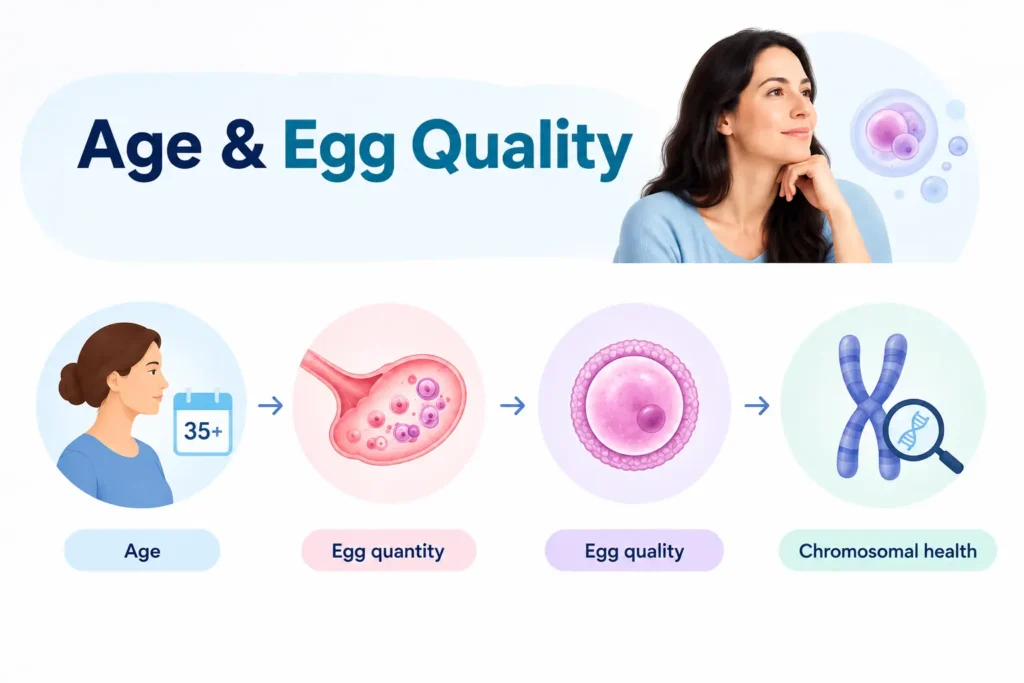
Every woman starts life with a fixed number of eggs, and that reserve declines steadily with age. The decline is not dramatic in the early thirties, but it usually speeds up from the mid thirties onward. Egg quality follows a similar pattern. Older eggs carry a higher chance of chromosomal abnormalities, which lowers the likelihood that a fertilized egg develops into a healthy embryo.
Egg quality after 35 does not fall off a cliff for every woman, but the average trend is real enough that most fertility specialists recommend testing ovarian reserve rather than assuming based on age alone.
According to Cleveland Clinic, the age at which eggs are frozen has a strong influence on later outcomes, since younger eggs generally survive the thaw and fertilize more reliably than older ones. This is the core reason the timing conversation matters more than most people expect.
Egg Freezing After 35 in Pune: What the Research Actually Shows
Clinics across Pune, including Pimpri-Chinchwad, report a consistent pattern: women who freeze eggs after 35 often need more eggs collected, sometimes across two cycles, to reach the same expected chance of a future live birth that a younger patient might reach in one cycle. This is not a reason to avoid the procedure. It is a reason to plan the number of cycles and the budget realistically from the start rather than assuming one round will be enough.
Ovarian response to stimulation medication also tends to be more variable after 35. Some women still respond strongly and retrieve a good number of mature eggs. Others need adjusted protocols and closer monitoring. An AMH (anti Mullerian hormone) blood test and antral follicle count on ultrasound are the two tools that give a specialist a realistic picture before treatment begins.
Chances of Pregnancy With Frozen Eggs After 35
| Factor | Typically at 35 | Typically after 38 to 40 |
|---|---|---|
| Eggs retrieved per cycle | Moderate, more variable | Often lower, more variable |
| Proportion of chromosomally normal eggs | Declining gradually | Declining more noticeably |
| Cycles often needed to bank a strong reserve | Often one to two | Sometimes two or more |
| General outlook | Good with realistic planning | Possible, with closer monitoring and counseling |
Chances of pregnancy with frozen eggs after 35 depend far more on individual ovarian reserve, the number of eggs successfully banked, and the lab’s vitrification standards than on the exact age written on a birth certificate. Two women born the same year can have very different starting points.
Is 35 Too Late? What It Really Depends On
The honest answer is no, but with a caveat. Thirty five is not too late for most women, though it does usually mean a more deliberate approach than freezing at 30 would. The real deciding factors are ovarian reserve test results, general health, and how many eggs a woman and her specialist agree is a reasonable target for her situation. This is the actual question behind egg freezing after 35 in Pimpri-Chinchwad, not a fixed rule about a single birthday.
Mayo Clinic fertility preservation notes that oocyte cryopreservation remains one of the standard options offered to women who want to preserve fertility, regardless of the exact reason for delaying pregnancy. Age is one input into that decision, not a strict cutoff.
What Happens During Egg Freezing After 35 in Pimpri-Chinchwad
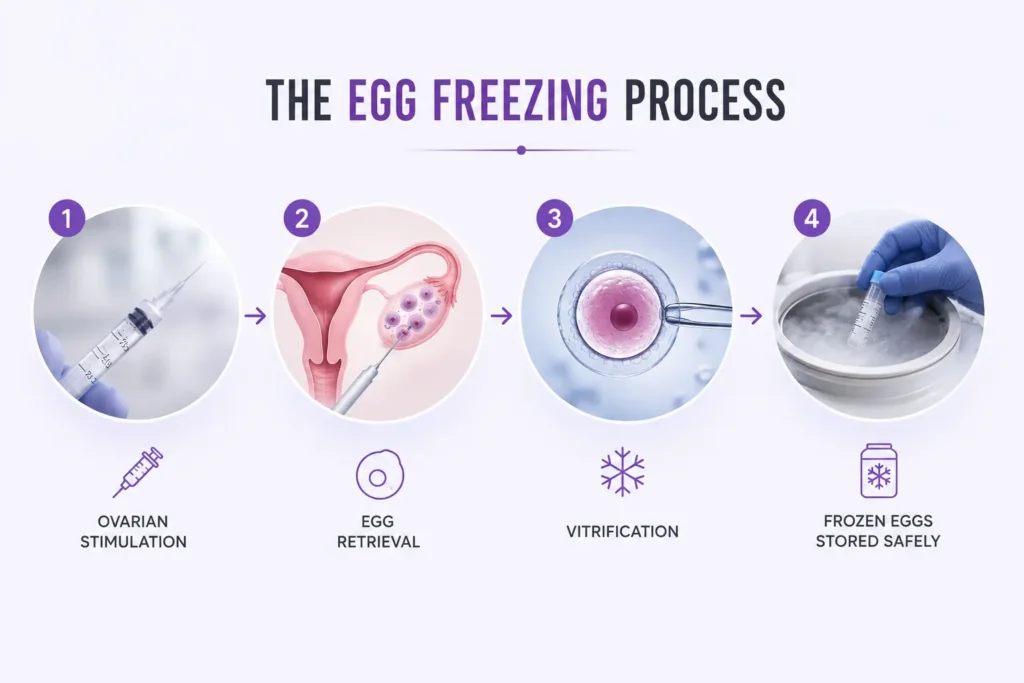
- Baseline testing, including AMH, antral follicle count, thyroid screening, and a general health review.
- Ovarian stimulation using injectable hormones over about ten to twelve days, with ultrasound monitoring to track follicle growth.
- Egg retrieval under sedation, a short outpatient procedure usually completed within twenty to thirty minutes.
- Vitrification, where mature eggs are rapidly frozen and stored securely until the patient is ready to use them.
Patients weighing this decision can review the egg and sperm freezing page to understand eligibility criteria, the testing sequence, and what a first consultation typically covers before committing to a cycle.
Fertility Preservation in Pune: Why More Women Are Testing Reserve Early
Pimpri-Chinchwad and the surrounding industrial and IT belt have a large population of working professionals who are marrying and planning families later than previous generations. Career timelines, financial planning, and simply not having met the right partner yet are all common, legitimate reasons behind that shift.
What has changed recently is not the biology, but the awareness around it. More patients are choosing fertility preservation in Pune proactively, testing ovarian reserve in their early thirties so that any decision about egg freezing after 35 in Pimpri-Chinchwad is based on actual numbers instead of guesswork or panic.
Choosing the Best Egg Freezing Clinic in Pimpri-Chinchwad
Not every clinic offers the same depth of monitoring or laboratory standards, and this matters more, not less, once a patient is past 35 and every retrieved egg counts. When comparing the best egg freezing clinic in Pimpri-Chinchwad for your situation, ask about the embryology team’s experience with vitrification, how stimulation protocols are personalized, and whether your specialist reviews your own AMH and antral follicle results before recommending a plan.
Patients in and around Pimpri-Chinchwad can review the IVF center in Pimpri-Chinchwad to see the full range of fertility services available locally, including consultations built around your specific age, reserve, and timeline rather than a generic protocol.
So is 35 too late? For nearly all women, no. Egg freezing after 35 in Pimpri-Chinchwad is a realistic, well established option, and the sooner a woman gets her ovarian reserve tested, the more informed that decision becomes.
Frequently Asked Questions About Egg Freezing After 35
1. Is 35 too late to freeze my eggs
No. Thirty five is not too late for most women, though egg quantity and quality are typically lower than in the twenties or early thirties. Many women in their mid thirties still bank a meaningful number of eggs, sometimes across two cycles. An AMH test and antral follicle count give a far more accurate picture than age alone.
2. What is a good AMH level after 35
AMH ranges vary by laboratory, so your specialist will compare your result to that lab’s specific reference range rather than a single universal number. As a general pattern, values that sit well below the typical range for your age group usually prompt a closer look alongside an antral follicle count.
3. How many eggs should I freeze after 35
Because egg quantity and quality are usually lower after 35, specialists often recommend banking more eggs than they would for a younger patient to reach a similar chance of a future live birth. This sometimes means planning for two retrieval cycles from the outset.
4. Does egg quality decline suddenly at 35 or gradually
The decline is generally gradual rather than sudden. Thirty five is often described as a point where the trend becomes more noticeable on average, not a hard cutoff where everything changes overnight. Individual variation is significant, which is why testing matters more than the number itself.
5. What are the chances of pregnancy with frozen eggs after 35
Chances depend on the number of eggs successfully banked, their quality at the time of freezing, and the lab’s vitrification and thawing standards. Rather than relying on a single statistic, your specialist can walk through what your specific test results and egg count suggest for your situation.
6. Is egg freezing after 35 painful
Egg retrieval is performed under sedation, so patients do not feel the procedure itself. Mild cramping, bloating, or spotting afterward is common and usually settles within a few days. The daily hormone injections during stimulation can cause minor site irritation but are generally well tolerated.
7. How long can eggs frozen after 35 be stored
Vitrified eggs can typically be stored for many years without a meaningful decline in quality, since freezing halts biological aging at the cellular level. Storage duration limits and renewal requirements vary by clinic and current regulations, so confirm specifics directly with your provider.
8. Does egg freezing after 35 guarantee a future pregnancy
No fertility procedure can guarantee a pregnancy. Egg freezing improves the odds of a future live birth compared to relying only on eggs conceived naturally at an older age, but outcomes still depend on the number and quality of eggs frozen and individual health factors at the time of use.
9. How much does egg freezing cost in Pimpri-Chinchwad
Cost depends on the number of stimulation cycles needed, medication dosage, and annual storage fees. Because patients freezing after 35 sometimes need a second cycle to bank enough eggs, total cost can end up higher when the decision is delayed further. A consultation will give an accurate, personalized estimate.
10. Can lifestyle changes improve egg quality after 35
Maintaining a healthy weight, avoiding smoking, managing stress, and treating conditions such as thyroid imbalance or PCOS can support overall reproductive health. Lifestyle changes cannot reverse the natural age related decline in egg quantity and quality, so they work best alongside timely testing, not instead of it.
11. Is IVF with my own eggs still possible after 35
Yes, for most women. IVF with your own eggs remains a standard first option after 35, and many patients succeed with it, sometimes needing more than one cycle. Your specialist will base the recommendation on your actual ovarian reserve results rather than age alone.
12. Should I freeze eggs or embryos after 35
Both are valid options and the right choice depends on your relationship status, comfort level, and future plans. Egg freezing keeps options open if you do not yet have a partner or are unsure about using donor sperm, while embryo freezing is sometimes chosen by couples who are certain about their partner. A specialist can walk through which fits your situation.
13. Does a low AMH after 35 mean I cannot get pregnant naturally
Not necessarily. AMH reflects the size of your remaining egg reserve, not whether natural conception is currently possible. Many women with a lower than average AMH still conceive without treatment, though it can mean a shorter window to do so, which is why earlier testing is useful.
14. How soon should I start the process if I am already 35 or older
Sooner rather than later, simply because ovarian reserve tends to decline further with each passing year. Booking an AMH test and antral follicle count as a first step lets you and your specialist make a timely, informed decision rather than losing months to uncertainty.
15. What is the first step to start egg freezing after 35 in Pimpri-Chinchwad
The first step is a consultation that includes an AMH blood test, an antral follicle count on ultrasound, and a general health review. These results, not your age alone, determine the recommended stimulation protocol and how many cycles are realistically worth planning for.
16. If some women conceive naturally after 35 with no trouble, why does age matter so much for egg freezing
Individual stories vary widely, and many women do conceive naturally after 35 without any difficulty. Age related decline is a population level pattern, not a guarantee for any single woman. The reason age still matters for egg freezing is that it affects the average odds and the number of eggs likely needed, even though plenty of individuals fall outside that average in either direction. An ovarian reserve test is the only way to know where you personally stand.
17. Does CoQ10 help improve egg quality after 35
Coenzyme Q10 is sometimes recommended as a supplement that may support mitochondrial function in eggs, which is one factor linked to egg quality. Evidence on how much difference it makes is still developing, and it should be seen as a possible supportive measure rather than a substitute for timely testing or treatment. Discuss dosage and suitability with your fertility specialist before starting any supplement.
18. Is natural conception still possible at 42, or should I consider egg freezing or IVF
Natural conception at 42 is possible for some women, though the odds are meaningfully lower than at 35 due to reduced egg quantity and quality. If you are already 42 and hoping to conceive, most specialists would recommend a prompt fertility evaluation, including AMH and antral follicle testing, rather than waiting, so that all options, including IVF with your own or donor eggs, can be discussed with accurate information. It is also a reminder of why the earlier decision around egg freezing after 35 in Pimpri-Chinchwad matters, since testing sooner keeps more options open later.