

A woman in her early thirties walks into a fertility consultation in Wakad expecting a simple number. Instead, she gets a range, a table of probabilities, and a conversation about age, ovarian reserve, and how many children she eventually wants. That range confuses most first time patients, and how many eggs to freeze in Wakad is the single most common question fertility specialists there hear before a woman commits to the process.
Egg freezing, medically called oocyte cryopreservation, involves stimulating the ovaries with hormone injections to produce multiple eggs, retrieving them through a short outpatient procedure, and storing them at extremely low temperatures until the patient is ready to use them for a future pregnancy attempt. The number of eggs frozen, not just the decision to freeze, is what determines whether those eggs can realistically lead to a baby years later.
How Many Eggs to Freeze in Wakad Actually Depends On
There is no single correct answer to how many eggs to freeze in Wakad. Three factors decide the target for each patient, and a fertility specialist reviews all three before recommending a number.
- Your age at the time of retrieval, since egg quality declines faster after 35
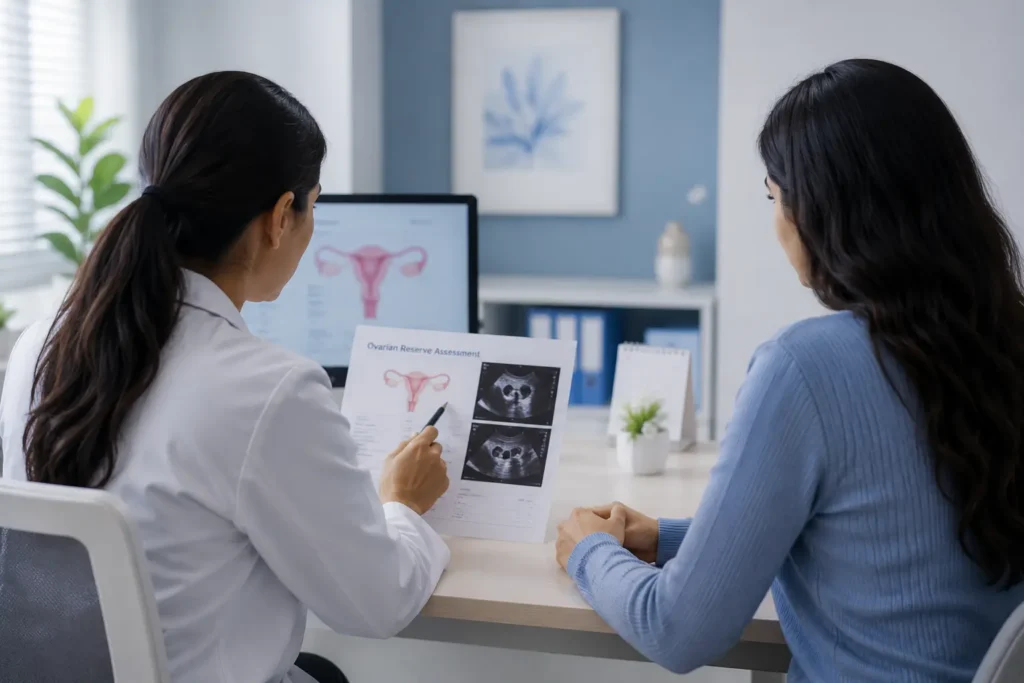
- Your ovarian reserve, measured through an AMH blood test and an antral follicle count
- How many children you hope to have, since more future pregnancies require more stored eggs
A 30 year old with a normal ovarian reserve and a 39 year old with a diminished reserve are not working toward the same number, even if both walk out of the same clinic in Wakad on the same day.
A widely used live birth probability model found that freezing 10 mature eggs at age 35 or younger gives roughly a 69 percent chance of at least one live birth, while the same 10 eggs frozen at 40 lower that chance to around 30 percent.
Age Wise Numbers for Eggs Needed for Future Pregnancy
Fertility specialists rely on published data rather than guesswork when they recommend a target. The table below reflects the age wise ranges most clinics, including those serving Wakad and greater Pune, use as a starting point when discussing how many eggs to freeze with a new patient.
| Age at Freezing | Mature Eggs Typically Recommended | Approximate Chance of One Live Birth |
|---|---|---|
| Under 35 | 15 to 20 eggs | 70 to 90 percent |
| 35 to 37 | 18 to 20 eggs | 50 to 80 percent |
| 38 to 40 | 25 to 30 eggs | 30 to 65 percent |
| Over 40 | 30 or more eggs | Below 30 percent, varies widely |
These figures are population averages, not guarantees for any individual. A woman with strong ovarian reserve at 38 may respond better than the table suggests, while another with diminished reserve at 32 may need to plan for more eggs than her age alone implies. This is exactly why the number of eggs to freeze in Pune or Wakad is set after testing, never before it.
Why the Number You Retrieve Is Not the Number You Bank
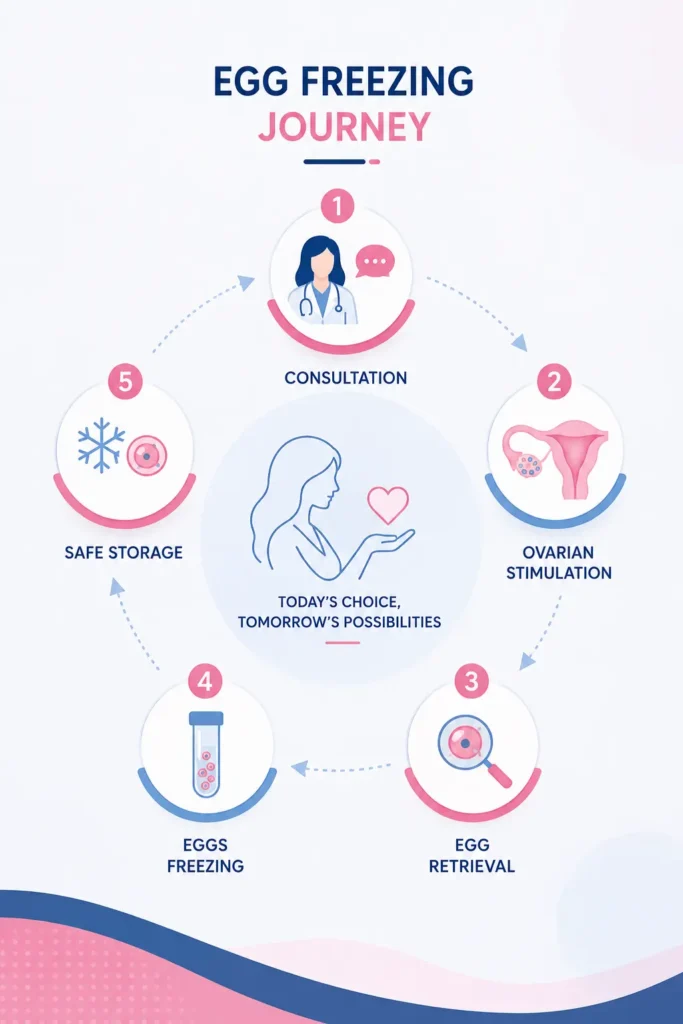
Patients are often surprised that a retrieval of 12 eggs does not translate into 12 usable eggs later. Cleveland Clinic notes that most retrievals yield around 10 to 12 eggs, but several stages still sit between egg retrieval for freezing and a genuinely viable, mature stored egg.
- Not every egg collected during retrieval is mature enough to freeze successfully
- A portion of frozen eggs do not survive the thawing process years later
- Of the eggs that survive thawing, not all fertilize normally
- Only some fertilized eggs develop into embryos strong enough to transfer
This drop off at every stage is why specialists talk in terms of mature eggs for freezing rather than the raw retrieval count. It also explains why two patients who each retrieve 10 eggs can walk away with very different long term odds, depending on egg maturity and quality at each step. You can review how the retrieval and storage process works in detail on our egg and sperm freezing page.
How Many Cycles Egg Freezing in Wakad Usually Takes
A single stimulation cycle typically yields somewhere between 8 and 14 eggs in a patient with normal ovarian reserve. If your target is 20 mature eggs, one cycle rarely gets you there on its own.
Most women aiming for the higher end of their age appropriate range complete two stimulation cycles, spaced a few weeks to a few months apart. Your specialist will recheck your ovarian reserve and hormone response after the first cycle before deciding whether a second cycle is the right way to reach your personal target.
- The first cycle yields fewer mature eggs than your recommended target
- Your hormone response suggests a second cycle would add meaningfully to the count
- You are under 35 and want the stronger odds that come with a higher egg number
Planning for more than one cycle from the start also changes the practical side of the decision. Repeated monitoring visits, blood tests, and ultrasound scans mean that choosing a fertility centre in Pune or Wakad that is genuinely convenient to reach matters as much as the clinic’s success numbers.

Why Location Changes the Egg Freezing Conversation
Stimulation cycles are not a single appointment. They involve daily hormone injections at home combined with monitoring visits every two to three days for about ten to fourteen days. A woman working in Hinjewadi or living near Wakad who chooses a distant clinic in central Pune often finds the monitoring schedule harder to sustain than the injections themselves.
Choosing an egg freezing specialist in Wakad keeps those repeat visits close to home or the workplace, which matters when the stimulation phase already asks patients to manage hormone side effects alongside their normal routine. Patients travelling in from Pimpri Chinchwad or other parts of Pune for consultations still benefit from a Wakad based clinic once the monitoring phase begins, since it shortens the distance for the most frequent visits. Our IVF center in Wakad handles both the initial ovarian reserve testing and the full stimulation and retrieval cycle under one roof.
Questions Worth Asking Before You Set Your Target
A good consultation does not end with a single number written on a prescription pad. Before starting a cycle, ask your specialist the following.
- What does my AMH level and antral follicle count suggest about my likely response
- How many eggs are realistic to retrieve in one cycle for someone with my results
- Should I plan for one cycle or budget for two from the outset
- What happens if my retrieval falls short of the recommended range
Every one of these questions changes how many eggs to freeze in Wakad you should realistically plan for, and a specialist who takes time to answer them clearly is one worth trusting with the process.
There is no universal figure that answers how many eggs to freeze for every patient walking through a fertility clinic’s doors. The right number comes from your age, your ovarian reserve, and how many children you hope to have, tested and discussed with a specialist rather than assumed from an average. Getting that number right at the start is what makes the eggs sitting in storage today actually useful ten years from now.
Frequently Asked Questions About Egg Freezing Numbers
1. How many eggs should I freeze if I am under 30?
Women under 30 generally have both higher egg quality and a stronger ovarian reserve, so many reach a target of 15 to 20 mature eggs within one or two cycles. Because egg quality is typically better at this age, some specialists suggest that even numbers toward the lower end of that range carry reasonably good odds. Your actual target still depends on your ovarian reserve testing rather than age alone, so a consultation and AMH test remain the starting point before any cycle is planned.
2. Is 8 to 10 eggs enough to freeze?
It depends heavily on your age at retrieval. For a woman 35 or younger, 10 mature eggs can offer a meaningful chance of one live birth, though not a guaranteed one. For a woman over 38, the same number offers a considerably lower probability, since egg quality declines with age. Most specialists will discuss whether your results suggest a second cycle is worth pursuing rather than stopping at a lower count.
3. Does freezing more eggs guarantee a baby later?
No. Egg freezing improves the odds of a future pregnancy compared with waiting until natural fertility declines further, but it does not guarantee a live birth at any number. Some eggs will not survive thawing, some will not fertilize, and not every embryo will implant successfully. Freezing more eggs increases the statistical chance of success, which is why age appropriate targets exist, but no clinic can promise a specific outcome.
4. What if my ovarian reserve is lower than average for my age?
A lower than average ovarian reserve does not rule out egg freezing, but it usually changes the plan. Your specialist may recommend starting sooner rather than waiting, adjusting your stimulation medication dosage, or planning for two cycles instead of one from the outset. Testing your AMH level and antral follicle count early gives your specialist the clearest picture of what is realistic for you specifically.
5. How many eggs survive the thawing process years later?
Not every frozen egg survives thawing, which is one reason specialists recommend freezing more mature eggs than the bare minimum needed for one pregnancy. Vitrification, the fast freezing method used in most modern clinics, has significantly improved survival rates compared with older slow freezing techniques, but some loss at the thawing stage is still expected and factored into age based recommendations.
6. Should I freeze eggs or embryos instead?
Egg freezing preserves unfertilized eggs, which keeps your options open if you do not yet have a partner or have not decided on a sperm donor. Embryo freezing involves fertilizing eggs with sperm before freezing, which can offer a clearer picture of viability but requires that decision to be made earlier. Your specialist can walk you through which option fits your current circumstances and timeline.
7. How many stimulation cycles will I realistically need?
Many women reach their target within one to two cycles, though this depends on age, ovarian reserve, and how many eggs are recommended for their particular situation. Your specialist typically reviews your response after the first cycle, including how many mature eggs for freezing were actually retrieved, before recommending whether a second cycle would meaningfully improve your odds of reaching an age appropriate number.
8. At what age should I freeze my eggs if I am planning ahead?
Egg quality and ovarian reserve both decline with age, and the decline tends to accelerate after 35. Freezing earlier generally means needing fewer eggs to reach the same probability of a future live birth. That said, the right timing depends on personal circumstances as much as biology, and a fertility specialist can help weigh your test results against your own plans.
9. How long can frozen eggs be stored before they are used?
Current evidence suggests that properly vitrified eggs can remain viable in storage for many years without a meaningful decline in quality, since the freezing process halts biological aging at the cellular level almost entirely. Storage duration itself has not been shown to significantly affect thaw survival or later outcomes, though clinics typically require periodic renewal of storage agreements and written consent from the patient.
10. Does choosing a clinic in Wakad affect my results compared with central Pune?
Clinical outcomes depend on the expertise of the embryology lab and the specialist managing your cycle, not simply the neighbourhood. What a Wakad based fertility centre changes is convenience, since stimulation cycles require frequent monitoring visits over roughly two weeks. Choosing a clinic close to home or work in Wakad, Hinjewadi, or nearby Pimpri Chinchwad often makes that monitoring schedule considerably easier to manage without affecting the quality of care.
11. How much does egg freezing cost in Wakad?
Cost depends on how many stimulation cycles you need, your medication dosage, and how long you plan to store your eggs, so a single fixed figure rarely applies to everyone. Broadly it breaks into three parts, medication, the retrieval procedure, and annual storage fees. Since how many eggs to freeze varies by age and ovarian reserve, the clearest way to get an accurate estimate is a consultation where your specialist reviews your results and outlines a cycle plan specific to you.
12. My AMH level came back low. Does that change how many eggs I should freeze?
A low AMH result usually signals a reduced ovarian reserve, which often means fewer eggs are retrieved per cycle even with a strong medication response. Your specialist may recommend starting sooner, adjusting your protocol, or planning for more than one cycle to reach a meaningful number of mature eggs for freezing. A low AMH value does not rule out egg freezing, but it does make the conversation about realistic targets more important than it would be for someone with a stronger reserve.
13. Is egg freezing actually available at a clinic in Wakad, or do I need to travel to central Pune?
Yes, ovarian reserve testing, stimulation monitoring, retrieval, and storage can all be handled at a fertility centre based in Wakad, without travelling into central Pune for any stage. This matters because stimulation needs monitoring visits every few days for about two weeks, and having the whole process available locally makes that schedule considerably easier to manage. Ask any clinic directly whether retrieval and storage happen on site or whether samples are sent elsewhere.
14. Can men freeze sperm too, and does that change how many eggs we need as a couple?
Yes, sperm freezing is a separate, simpler process that does not require hormone stimulation and can often be completed in a single visit. If a couple plans to use fresh sperm at the time of a future transfer, freezing sperm may not be necessary at all, though some choose to for scheduling flexibility. Freezing sperm alongside eggs does not change the recommended egg count, since that target is based entirely on the female partner’s age and ovarian reserve.
15. How soon after egg or embryo freezing can a transfer happen?
There is no fixed minimum number of months that frozen eggs or embryos must wait before a transfer, contrary to a common assumption. Vitrified eggs and embryos stay stable in storage, so transfer timing is generally decided by when the uterine lining is properly prepared and the patient is medically and personally ready, which can be anywhere from a few months to several years later. Your specialist confirms a realistic transfer window based on your individual recovery and treatment plan.
16. Is 44 too late to freeze my own eggs?
By 44, egg quantity and quality have typically declined substantially, lowering the realistic chance of a live birth from eggs frozen at that age compared with freezing earlier. It is not an automatic cutoff, and ovarian reserve testing remains the only reliable way to know an individual’s situation rather than age alone. Many specialists discuss donor egg options alongside self egg freezing for patients in this age range, so the full range of realistic paths forward is on the table during the consultation.