
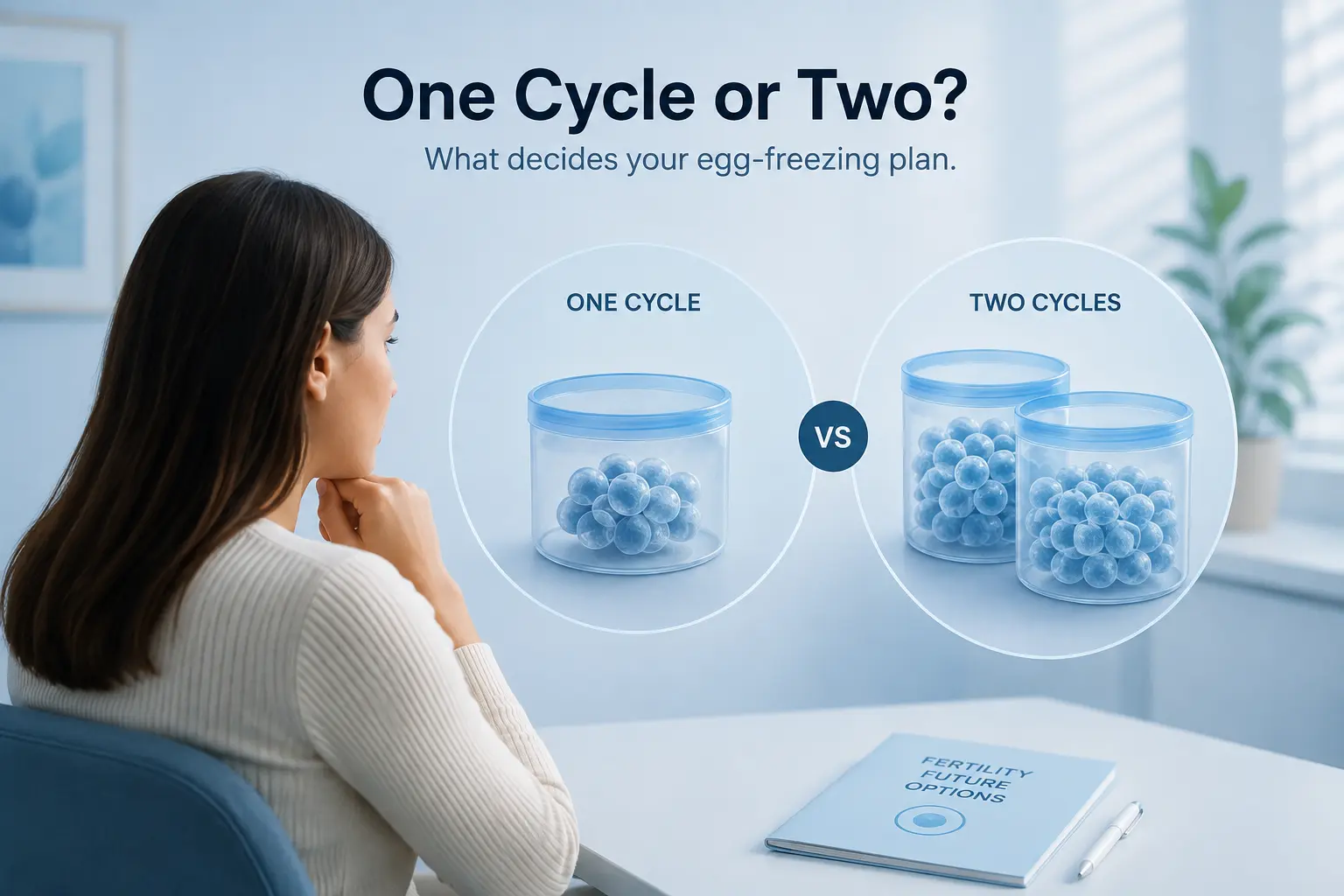
One woman walks out of her first egg retrieval in Wakad with sixteen frozen eggs. Another, same age bracket, same clinic, same protocol, walks out with five. That gap is exactly why multiple egg freezing cycles in Wakad have become a normal part of treatment planning rather than a rare exception saved for medical outliers.
Egg freezing, or oocyte cryopreservation, uses ovarian stimulation medication to grow several eggs in one menstrual cycle so they can be retrieved, frozen and stored for later use. A single round is called one cycle. When the eggs collected in that first round fall short of a woman’s target number, her fertility specialist recommends a second, and sometimes a third, retrieval cycle to close the gap.
Why One Cycle Doesn’t Always Finish the Job
Ovarian response is personal, not standardised. Two women can walk into the same clinic with the same age on paper and come out of stimulation with very different follicle counts, which is precisely why multiple egg freezing cycles in Wakad get discussed as a real possibility from the first consultation rather than an afterthought. Age plays the biggest role, but it is not the only variable your body brings to the table.
- Age at the time of freezing, since egg quantity and the share of chromosomally normal eggs both decline over time.
- Baseline ovarian reserve, measured through AMH and antral follicle count before treatment even starts.
- How your ovaries respond to the specific stimulation protocol chosen for you.
- Whether the cycle proceeds smoothly or needs to be cut short due to poor follicle growth or a risk of overstimulation.
A 2024 cohort study tracking cumulative live birth rates after planned egg freezing found that age at freezing and the total number of mature oocytes collected predicted outcomes more strongly than the number of separate cycles it took to reach that total. This is a useful, and honestly reassuring, finding for anyone weighing multiple egg freezing cycles in Wakad against their budget and schedule.
Cumulative live birth rates exceeded 70 percent among women who eventually thawed 20 or more mature eggs frozen before age 38, according to the same 2024 retrospective study.
That finding matters for how you think about the decision. The goal is never simply “how many cycles.” It is reaching a mature egg count that gives you realistic odds later, however many retrievals that takes.
What Your AMH and Antral Follicle Count Tell You First
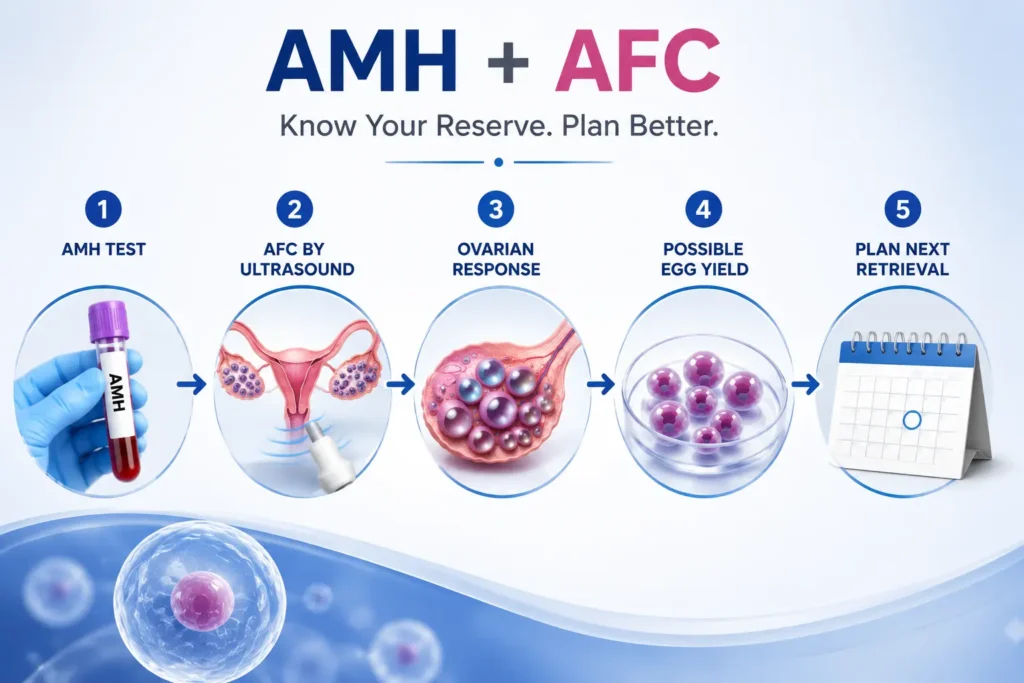
Before your first cycle begins, your specialist checks AMH levels and antral follicle count through a transvaginal ultrasound. These two markers estimate how many eggs your ovaries are likely to produce with ovarian stimulation for egg freezing, which lets your doctor set expectations honestly rather than promising a number they cannot guarantee.
Low AMH does not mean egg freezing will not work for you. It usually means your specialist plans for the possibility of a second retrieval from the very first consultation, rather than treating one cycle as a fixed endpoint. High AMH, on the other hand, often points to a stronger single cycle yield, though age still shapes how many of those eggs are usable later.
How Many Eggs Should You Bank From a Single Retrieval
Patients frequently ask their egg freezing specialist in Wakad for a target number before starting. There is no single answer that fits everyone, but the number of eggs after one cycle usually settles most of the question once it is actually in hand, and the research gives useful reference points to plan around. Cleveland Clinic notes that egg freezing outcomes depend heavily on age and individual ovarian response, which is exactly why targets are ranges rather than guarantees.
- Under 35: around 15 to 20 mature eggs generally supports strong odds.
- 35 to 37: often 20 or more mature eggs is the more realistic target.
- 38 and above: higher counts are recommended, alongside a candid conversation about realistic expectations.
Reaching these ranges in one retrieval is common for women in their twenties and early thirties with a good ovarian response. It is far less common past 35, which is one reason multiple egg freezing cycles in Wakad are discussed openly with patients in that age group rather than presented as an unusual add on.
Multiple Egg Freezing Cycles in Wakad: What a Second Retrieval Actually Involves
Doing a second cycle is not a repeat performance of the first. Your specialist reviews exactly how your ovaries responded the previous time, including hormone levels, follicle growth and the number and maturity of eggs collected, and adjusts the plan accordingly.
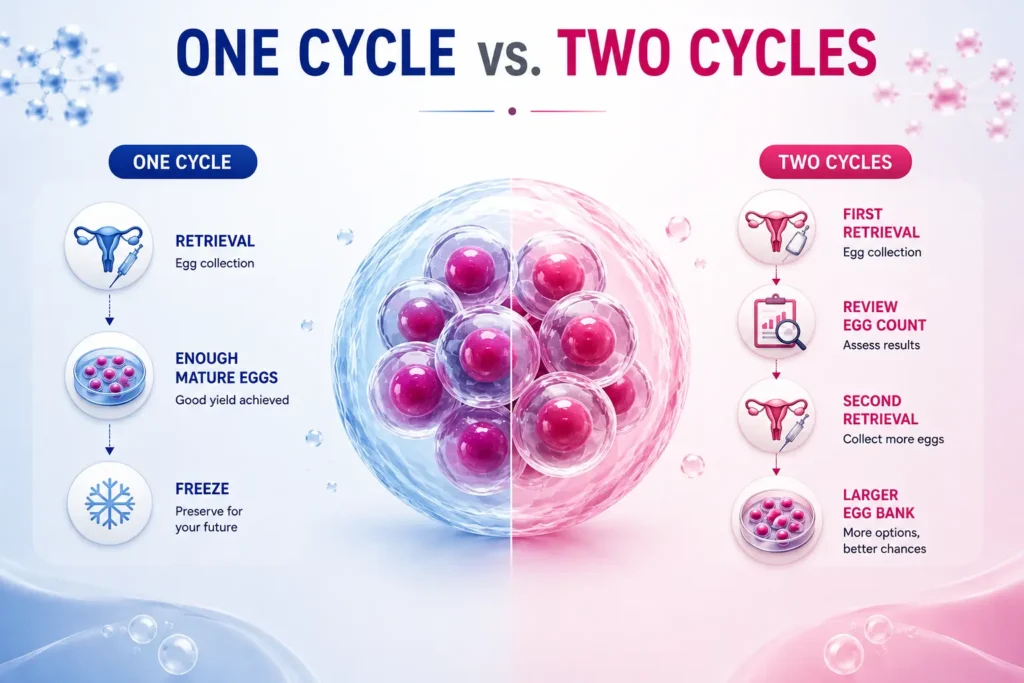
- A recovery gap of at least one full menstrual cycle, usually four to six weeks, before starting the next stimulation.
- Protocol adjustments, such as a different medication dose or trigger timing, based on your first response.
- Repeat monitoring through blood tests and ultrasounds during the new stimulation window.
- Eggs from the second retrieval are added to the same frozen bank as the first, so nothing from your earlier cycle goes to waste.
This is also why a second egg freezing cycle in Pune area clinics tends to feel more targeted than the first. Your doctor already has real data from your own body instead of working from general averages.
Multiple Egg Retrieval Cycles and the Cost Conversation
Cost is one of the most practical reasons this decision deserves an honest conversation early, since budgeting for multiple egg freezing cycles in Wakad looks very different from budgeting for one. A second cycle generally involves similar consultation, monitoring and retrieval charges as the first, since it follows the same clinical steps. Storage fees are usually billed per year for your total egg bank rather than per cycle, so combining eggs from two retrievals does not multiply that particular cost.
What can shift is the medication bill, since dosing in round two is based on how your body responded the first time. Asking your IVF center in Wakad for a clear cost breakdown before you begin gives you room to budget for a second round from the outset, rather than being caught off guard partway through treatment.
Deciding Between One Cycle and Two With Your Specialist
The most useful approach is sequential rather than speculative.
- Get your baseline AMH and antral follicle count checked first.
- Go through one round of ovarian stimulation and retrieval.
- Review the actual number and maturity of eggs collected with your doctor.
- Decide together whether that number meets your goals or a second cycle is worth pursuing.
Your family building goals matter here too. Freezing eggs as a precaution while you decide what you want may feel complete after one cycle. Planning for more than one future child, or freezing later than you would have liked, often makes banking a higher number across more than one retrieval the more sensible path. Checking published success rates in Wakad alongside your own test results gives a fuller picture than either number alone.
There is no universal right answer between one egg freezing cycle or two in Wakad. The honest version of this decision is built cycle by cycle, using real numbers from your own body rather than a promise made before treatment even starts. An experienced egg and sperm freezing team at an IVF centre in Pune can walk you through your AMH results, set expectations before your first retrieval, and help you decide together whether multiple egg freezing cycles in Wakad are worth pursuing for your particular goals.
Frequently Asked Questions
1. How many eggs should I freeze to feel secure about my future?
Most fertility specialists look at your age and total mature egg count together rather than a single fixed number. Research tracking cumulative live birth rates after egg freezing found outcomes topped 70 percent for women who later thawed 20 or more mature eggs frozen before age 38, with age and total oocyte count predicting results more strongly than how many separate cycles it took to reach that number. For many women in their early thirties, one strong cycle produces enough eggs. For others, especially past 35, reaching a comfortable number naturally means combining eggs from more than one retrieval. Your specialist can translate your AMH and antral follicle count into a realistic per cycle estimate before you start.
2. Can I start a second egg freezing cycle right after my first?
You cannot begin ovarian stimulation again immediately after retrieval. Your ovaries need time to settle, and most clinics wait for at least one full natural period before starting the next round, usually four to six weeks. This gap can be longer if your ovaries showed signs of overstimulation or if hormone levels take time to return to baseline. Waiting also gives your doctor a complete picture of how your body responded the first time, which shapes the dose and protocol for the second attempt. Rushing back in too soon rarely improves results and can add unnecessary discomfort.
3. Does going through multiple egg retrieval cycles use up my egg reserve faster?
No. Each month, your body naturally recruits a group of follicles, and normally only one matures and is released while the rest are reabsorbed. Stimulation medication rescues several follicles that would have been lost anyway that month, so a second or third cycle does not draw down eggs that would otherwise have survived long term. Current evidence does not show that repeated stimulation cycles bring on earlier menopause or speed up natural egg loss. The eggs retrieved were already on their way out that particular month with or without treatment.
4. How long do I need to wait between two egg freezing cycles?
Most women wait roughly four to six weeks, or one full menstrual cycle, before starting a second stimulation. Your specialist checks that your ovaries have returned to their resting state on ultrasound and that hormone levels have settled before clearing you to begin again. If your first cycle was cancelled early or you developed signs of ovarian hyperstimulation, your doctor may recommend a longer recovery window. There is no strict cap on how many cycles you can do, but each one is spaced out to protect your comfort and safety.
5. Will my second cycle use the same medication protocol as my first?
Often not. Your specialist reviews how many follicles grew, how your hormone levels moved and how many mature eggs were collected in the first cycle, then adjusts the medication type or dose for round two. A low response might lead to a higher dose or a different stimulation approach, while a strong response with side effects might call for something gentler. This is one reason a second egg freezing cycle in Pune area clinics rarely repeats the first cycle exactly. It is a recalibrated attempt built on real data from your own body rather than a generic protocol.
6. My AMH is high, do I still need more than one cycle?
A high AMH level generally points to a larger pool of eggs available for retrieval, so a single cycle often yields more eggs for women with strong ovarian reserve. AMH measures quantity, not quality, and egg quality still declines with age regardless of how many follicles your ovaries carry. A woman in her late thirties with high AMH might still benefit from a second retrieval if age related factors mean a smaller share of her eggs are chromosomally normal. Your specialist weighs both AMH and age before deciding whether one cycle is likely to be enough for your goals.
7. What happens if my first retrieval gets cancelled due to poor response?
Cycle cancellation happens when the ovaries are not responding to stimulation as expected, and continuing would be unlikely to yield usable eggs. If this happens, your doctor reviews your hormone levels and follicle growth pattern to understand why, then adjusts the plan before trying again. This might mean switching medications, changing the starting dose or timing the next attempt differently within your cycle. A cancelled cycle is disappointing in the moment, but it gives your specialist information that often improves the outcome of the next attempt.
8. Are eggs from two different freezing cycles stored and counted together?
Yes. Every mature egg you freeze, whether from your first, second or third retrieval, goes into the same personal storage bank at the clinic. When you are ready to use them, your embryologist works with the full combined total rather than treating each cycle’s eggs separately. This is exactly why multiple egg freezing cycles in Wakad are planned as a cumulative strategy from the start. Each round adds to the same pool until you and your specialist agree you have banked enough eggs for your particular family building goals.
9. Does undergoing several stimulation cycles increase my risk of early menopause?
No credible evidence links repeated ovarian stimulation for egg freezing to earlier menopause. Stimulation medication works with the batch of follicles your body has already recruited for that particular month rather than pulling eggs from your lifetime reserve ahead of schedule. Menopause timing is determined by your underlying ovarian reserve and genetics, not by how many stimulation cycles you have completed. Clinics do monitor for temporary side effects like bloating or mild hormonal symptoms after each round, but these resolve on their own and do not affect your long term reproductive timeline.
10. How much more does a second egg freezing cycle cost compared to the first?
A second cycle typically costs close to what the first one did, since it involves the same stimulation medication, monitoring visits and retrieval procedure. Storage fees are usually charged per year for your total egg bank rather than per cycle, so adding eggs from a second round does not multiply that particular cost. Medication costs can shift slightly if your dose changes based on how you responded the first time. It helps to ask your IVF centre in Pune for a clear cost breakdown before starting, so you can budget for the possibility of a second round from the outset.